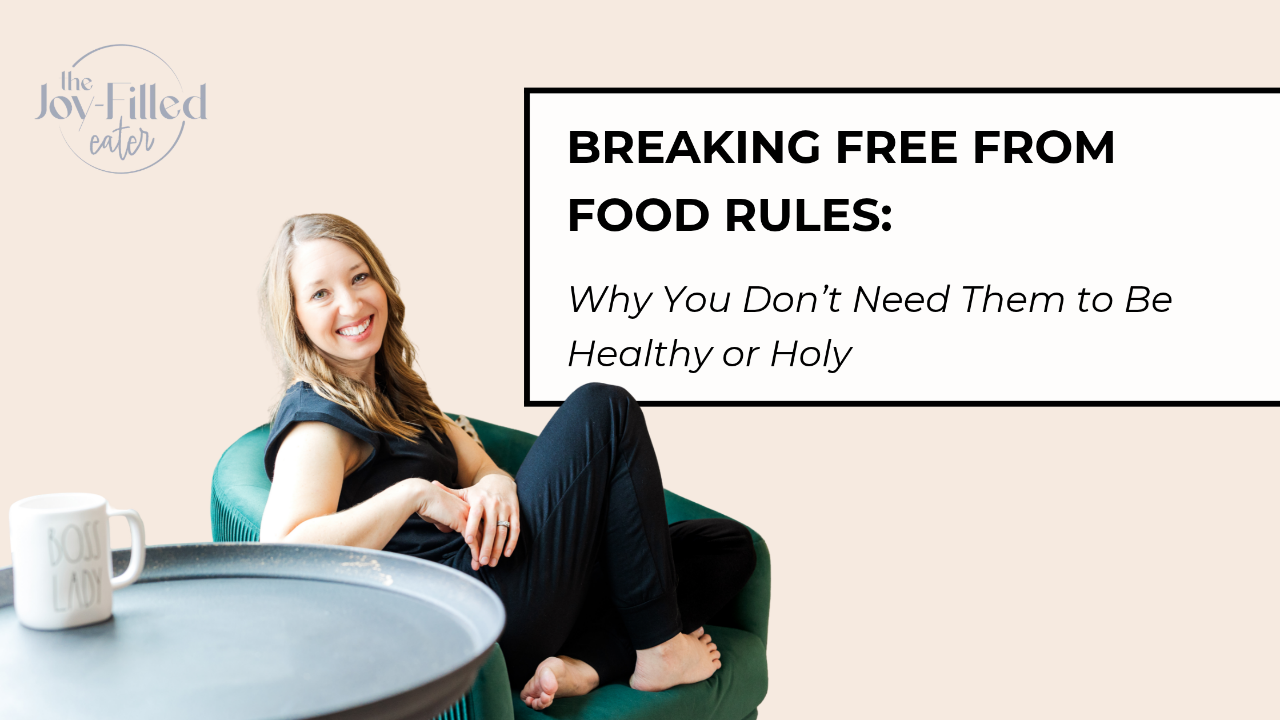
Breaking Free from Food Rules: Why You Don’t Need Them to Be Healthy or Holy
When a client first came to me, she brought a list. Not a grocery list. A rule list.
She had been carrying these rules around in her head for years, so I asked her to get them all down on paper. By the time she finished writing, she had more than twenty. No eating after 7 PM. No carbs at dinner. Nothing processed. Nothing “bad” in the house. Don’t eat unless you’ve earned it with a workout.
She created every one of them to feel healthy and safe. Instead, the list had turned into the world’s strictest homeowners association, and she was the only resident, constantly fining herself for violations. She never felt like she was doing anything well enough. Her body was more exhausted, her mind was more anxious, and her health was getting worse, not better.
If you just felt a little too seen, you are in good company. Food rules are rigid, moralized eating guidelines that tell you what you should and shouldn’t eat, and what it says about you when you get it wrong. They are everywhere, espec...
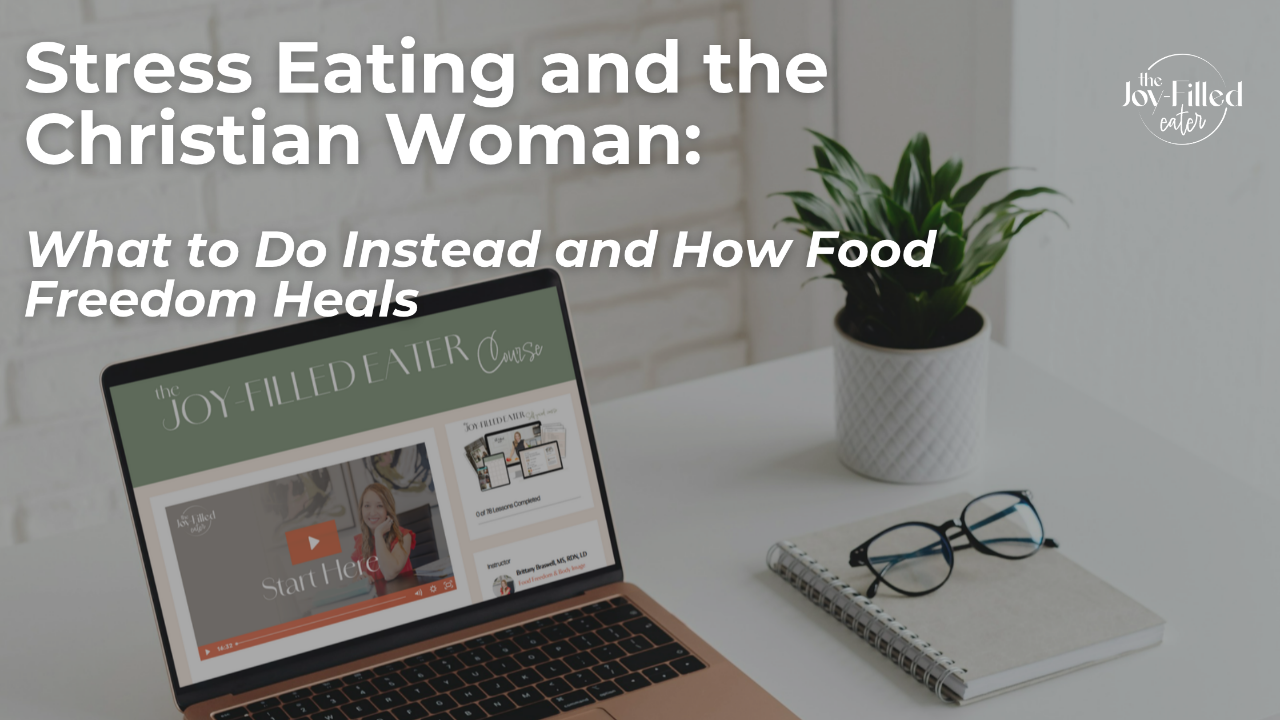
Stress Eating and the Christian Woman: What to Do Instead and How Food Freedom Heals
A while back, I worked with a woman who kept a bag of Doritos in her desk at work. It wasn’t there for snack time. It was there for survival. She worked at a university, managed a large team, and described her job as “high stress” so often that it could have been printed on her business card. When the day got loud, the drawer opened. The crunch gave her a few minutes of relief, and somehow she would end up at the bottom of the bag without being sure how she got there.
Here is what I want you to know about her: she was not weak, lazy, or short on faith. She was a capable, committed woman with exactly one tool in her coping toolbox, and it happened to be orange and triangle-shaped.
If you’ve ever reached for food when your day got heavy, you are in very good company. Stress eating is incredibly common, and it is often misunderstood in Christian circles, where it tends to get filed under “discipline problem” or “spiritual weakness.” It is neither one.
Stress eating has three layers: a ...
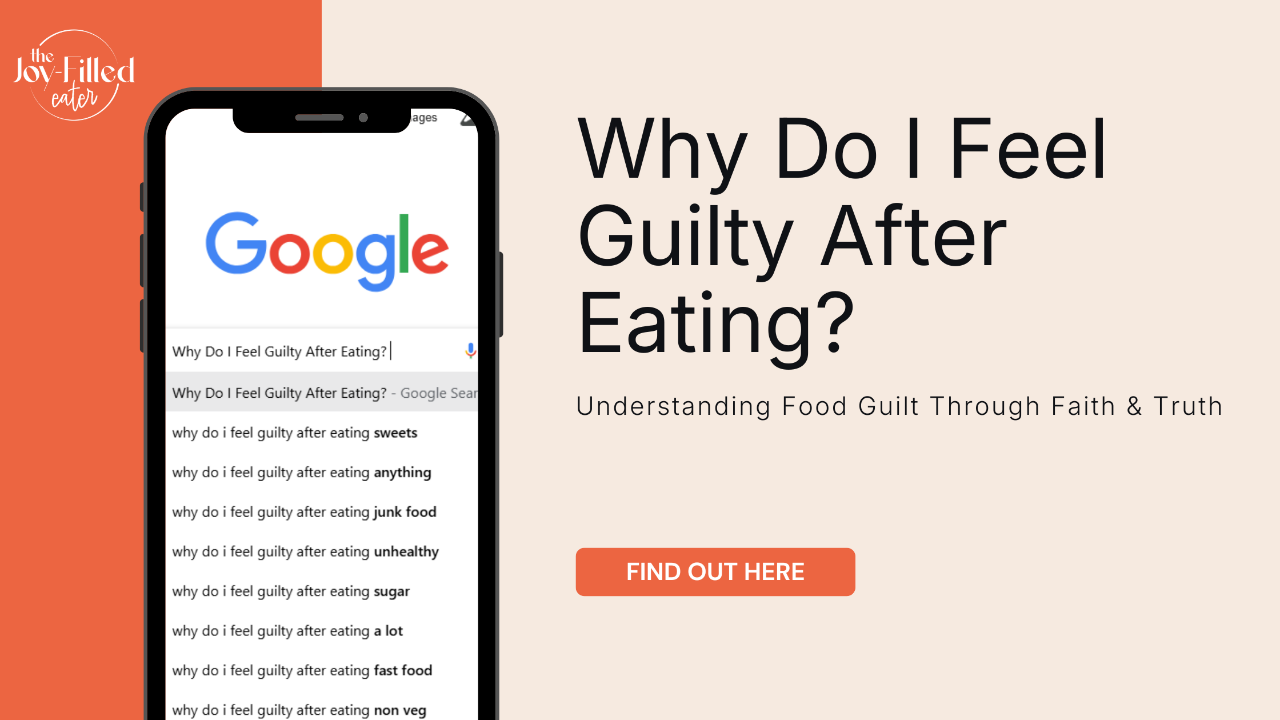
Why Do I Feel Guilty After Eating? Understanding Food Guilt Through Faith and Truth
She scraped the last bite of pasta off her plate, leaned back in her chair, and felt full in the best way.
For about ninety seconds.
Then it hit. That familiar tightening in her chest. The mental replay of every bite. The quiet, insistent voice asking what she was going to do to fix this. One of my clients described this exact moment to me not long ago, and I want you to know something before we go any further.
She isn't the only one who feels this.
If you've ever finished a meal, a totally normal, unremarkable meal, and felt regret wash over you before you even left the table, you're in good company. Food guilt is one of the most common threads I hear woven through the stories of the Christian women I work with. It shows up whether someone grew up counting points at Weight Watchers with her mom or memorizing which foods were "clean" at youth group potlucks. Diet culture and religious pressure have a sneaky way of tag-teaming a woman's relationship with her plate.
So today, we're ...
How to Quiet the Eating Disorder Voices So You Can Grow Closer to God
You love Jesus.
You genuinely want to trust Him more.
You want to spend time in His Word without your brain spiraling into thoughts about calories, exercise, your body, or what you're "allowed" to eat today.
But instead?
The eating disorder voice seems to have a microphone while God's voice feels like a whisper.
Friend, if you've ever wondered...
"Why does my mind feel so loud?"
"Why can't I seem to hear God over all these food and body thoughts?"
"How do I stop obsessing so I can actually grow in my faith?"
...you're not alone.
In fact, this question came directly from one of our podcast listeners during the You Asked For It series on the Faith-Filled Food Freedom podcast, and I honestly think it's one of the most important questions we could ask.
Because here's the truth:
Healing your relationship with food isn't separate from your relationship with God.
They're beautifully connected.
When your mind is consumed with food rules, body checking, guilt, shame, and anxiet...
A Christ-Centered Mindset Shift to Break the Restrict–Binge Cycle

What if the answer to breaking the restrict–binge cycle isn't more discipline... but more compassion?
Friend, can we be honest for a second?
Have you ever woken up the morning after a holiday, birthday party, girls' night, vacation, or even just a stressful Tuesday feeling like you needed to "make up for it"?
Maybe you immediately started bargaining with yourself.
"I'll skip breakfast."
"I'll eat super clean today."
"I just need to get back on track."
Or maybe your brain went straight to guilt.
"I knew better."
"Why did I eat that?"
"I have zero self-control."
If you've been there, first of all... you're not alone.
And second? Those thoughts aren't proof that you're lacking discipline. They're actually one of the biggest signs that you're stuck in the restrict–binge cycle.
Here's the good news.
You don't have to keep living there.
Today, I want to share one simple—but incredibly powerful—Christ-centered mindset shift that can help you interrupt that cycle before it ga...
What My 6-Year-Old Taught Me About Body Image (That Diet Culture Forgot)
If you've ever looked in the mirror and immediately started mentally listing everything you'd like to change... friend, this one's for you.
Because today, I want to introduce you to one of the wisest little people I know.
My six-year-old daughter, Callie.
A few weeks ago, she wandered into my office, spotted my podcast microphone, and asked, "Mommy, can we record a show?"
Of course I said yes.
One spontaneous conversation turned into five adorable, unscripted episodes in what became our Tiny Talk series on the Faith-Filled Food Freedom podcast. And while there were plenty of giggles, interruptions, and moments that were... let's just say delightfully unhinged (because, kids 😅)... there was also something incredibly profound hidden in those conversations.
Especially when we talked about body image.
As a registered dietitian who helps Christian women overcome disordered eating and body image struggles every single day, I spend countless hours helping women untangle years—someti...
What My 6-Year-Old Gets Right About Snacks That Grown-Ups Overcomplicate

"Mom, snacks are so good."
Honestly? My six-year-old isn't wrong. 😊
In one of my recent Faith-Filled Food Freedom Podcast episodes, my daughter Callie joined me behind the microphone for another installment of our Tiny Talk series. There was no script, no outline, and definitely no perfectly polished answers—just an honest conversation about snacks, being "hangry," and why Goldfish crackers somehow make everything better.
As I listened back to our conversation, I couldn't help but smile because underneath all the sweetness and childlike honesty was a really important reminder for adults too.
Especially for women who have spent years believing they "shouldn't" snack.
If you've ever found yourself wondering...
- Should I be eating snacks?
- Am I eating too often?
- Are snacks unhealthy?
- Why do I always feel out of control by dinnertime?
...then this post is for you.
Let's talk about why snacks aren't something to fear—and how they can actually become one of the most practical...
How to Know When You're Hungry & When You're Full: Relearning the Body Cues God Designed
"Mom... sometimes I get whiny when I don't have a snack."
I couldn't help but laugh.
Not because she was wrong—but because she was so right.
Recently, my six-year-old daughter and I sat down behind the microphone for another episode in our summer podcast mini-series. No script. No outline. Just an honest conversation about hunger, fullness, and what it feels like to listen to the body God created.
And somewhere between talking about gymnastics snacks, pizza taking way too long to arrive (whaaaat?! 😅), and getting "hangry," I was reminded of something I think many of us adults desperately need to hear:
Children naturally trust their bodies... until diet culture teaches them not to.
As Christian women, many of us have spent years overriding hunger, ignoring fullness, labeling foods as "good" or "bad," and believing we have to control every bite in order to control our bodies.
But what if food freedom starts by relearning something your body has known all along?
Let's talk abou...
A Simple Guide to Macronutrients and Micronutrients
Have you ever had one of those moments where your child asks a nutrition question and you suddenly realize you're not quite sure how to explain it in a way they'll understand?
You know the moment.
You're unloading groceries, serving dinner, or trying to convince your kiddo that the carrot on their plate isn't actually poison. Then they hit you with a question like, "What does this food do for my body?"
Cue the deer-in-headlights look.
Whaaaat?!
The truth is, nutrition can feel complicated enough for adults. Add in the challenge of explaining it to children, and suddenly we're all wishing for a simpler way to talk about food.
That's exactly what inspired a recent special mini episode of the Faith-Filled Food Freedom Podcast featuring my daughter and me. Together, we explored one of the foundational nutrition concepts every family can benefit from understanding: macronutrients and micronutrients.
Now before your eyes glaze over and you start having flashbacks to high school sci...
What Foods Are OK to Eat (and Not Eat)? My Daughter's Surprisingly Wise Answer
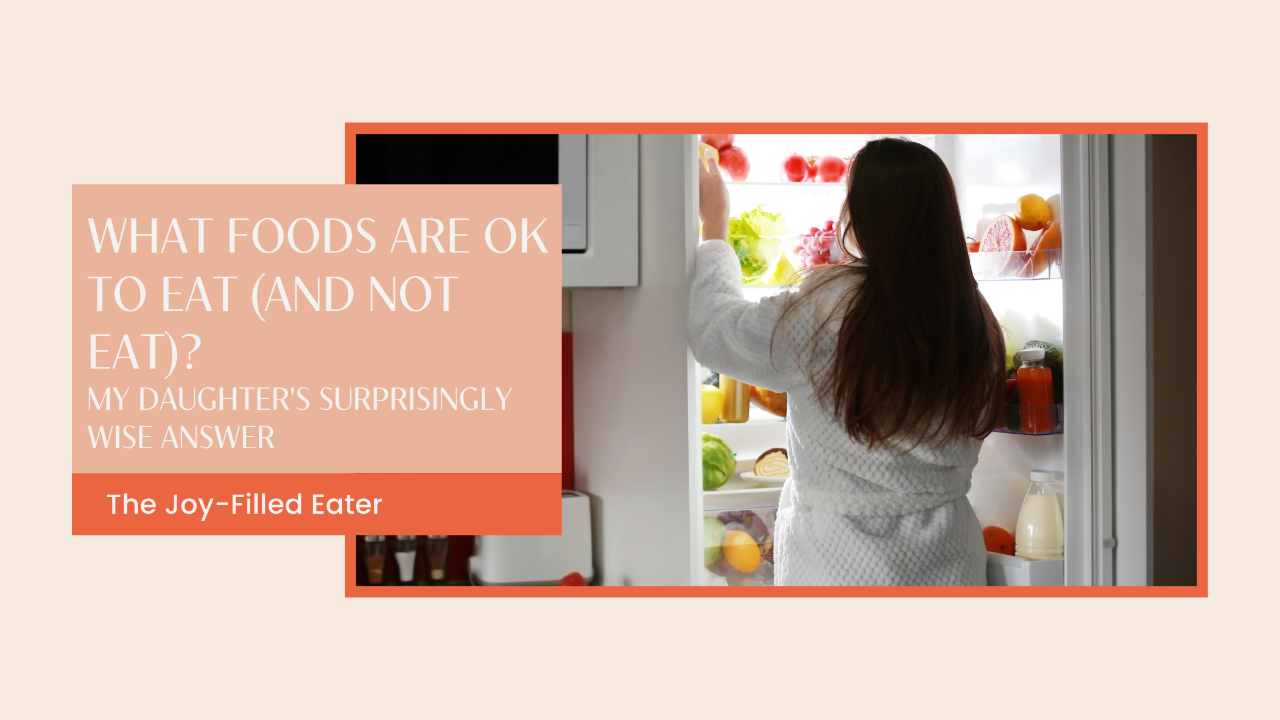
Have you ever found yourself standing in your kitchen staring into the pantry, mentally sorting foods into categories?
Good foods.
Bad foods.
Foods you should eat.
Foods you shouldn't eat.
Foods you've "been good" with.
Foods you've "fallen off track" with.
Friend, if that's you, can I lovingly tell you something?
You're not alone.
In fact, so many of the Christian women I work with spend hours every day trying to figure out what they should and shouldn't eat. They carry around an exhausting mental checklist of food rules, diet plans, nutrition advice from social media, and well-meaning suggestions from friends.
And honestly?
It's exhausting.
But recently, I had a conversation with someone who offered one of the simplest and wisest perspectives I've heard in a long time.
My 6-year-old daughter.
Yep. My sweet little girl unexpectedly dropped a food freedom truth bomb that I think every woman struggling with food anxiety needs to hear.
And it all started during her very...
I'm Brittany!
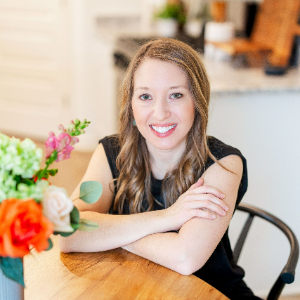
Brittany Braswell, MS, RDN, LD
Host of Faith-Filled Food Freedom & Creator of The Intern Accelerator
I'm here to help Christian women around the world overcome negative body image and an anxiety-ridden relationship with food so they can finally stop stressing and obsessing over how they look and what they eat.