What My 6-Year-Old Taught Me About Body Image (That Diet Culture Forgot)
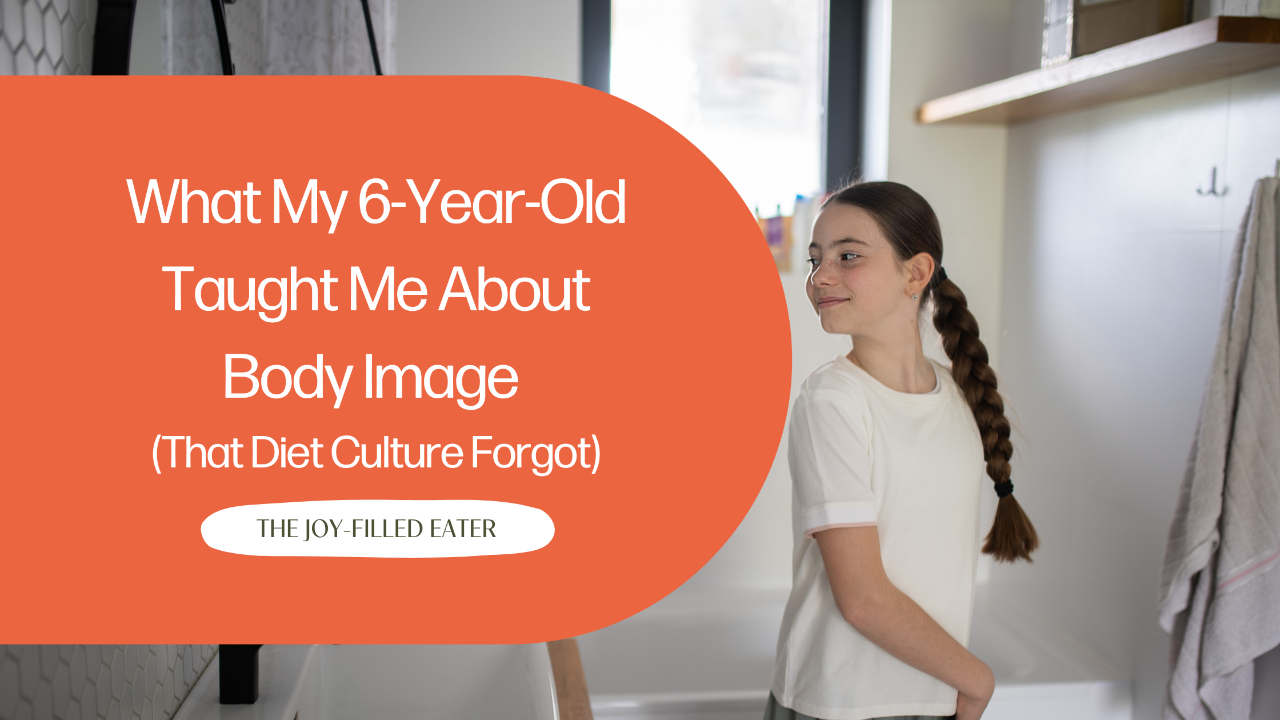
If you've ever looked in the mirror and immediately started mentally listing everything you'd like to change... friend, this one's for you.
Because today, I want to introduce you to one of the wisest little people I know.
My six-year-old daughter, Callie.
A few weeks ago, she wandered into my office, spotted my podcast microphone, and asked, "Mommy, can we record a show?"
Of course I said yes.
One spontaneous conversation turned into five adorable, unscripted episodes in what became our Tiny Talk series on the Faith-Filled Food Freedom podcast. And while there were plenty of giggles, interruptions, and moments that were... let's just say delightfully unhinged (because, kids 😅)... there was also something incredibly profound hidden in those conversations.
Especially when we talked about body image.
As a registered dietitian who helps Christian women overcome disordered eating and body image struggles every single day, I spend countless hours helping women untangle years—someti...
Breaking Free from Fad Diets: A Christian Woman’s Guide to Food Freedom

Let me paint you a picture.
You’re sitting at dinner with friends. Maybe it’s been a long day—work, kids, laundry, trying to remember if you drank water (oops 😅). You glance at the menu, already doing mental math:
“Can I have that?”
“Did I already eat too many carbs today?”
“Do I need to ‘be good’ tomorrow if I eat this?”
Meanwhile… someone across the table says, “I wish I could order that, but I’m on keto.”
And just like that, the spiral begins.
Friend, if you’ve ever felt trapped in that cycle—constantly thinking about food, second-guessing your choices, chasing the next thing that will finally “fix” your body—this post is for you.
Because today, we’re breaking up with fad diets. For good.
Why Fad Diets Feel So Darn Tempting (Even When We Know Better)
Let’s just say it out loud: fad diets are really good at marketing themselves.
They promise:
- Quick results
- A smaller body
- More confidence
- A “better” version of you
And in a world that thrives on instant gratificat...
Should I Be Avoiding Processed Foods? The Great Clean Eating Debate
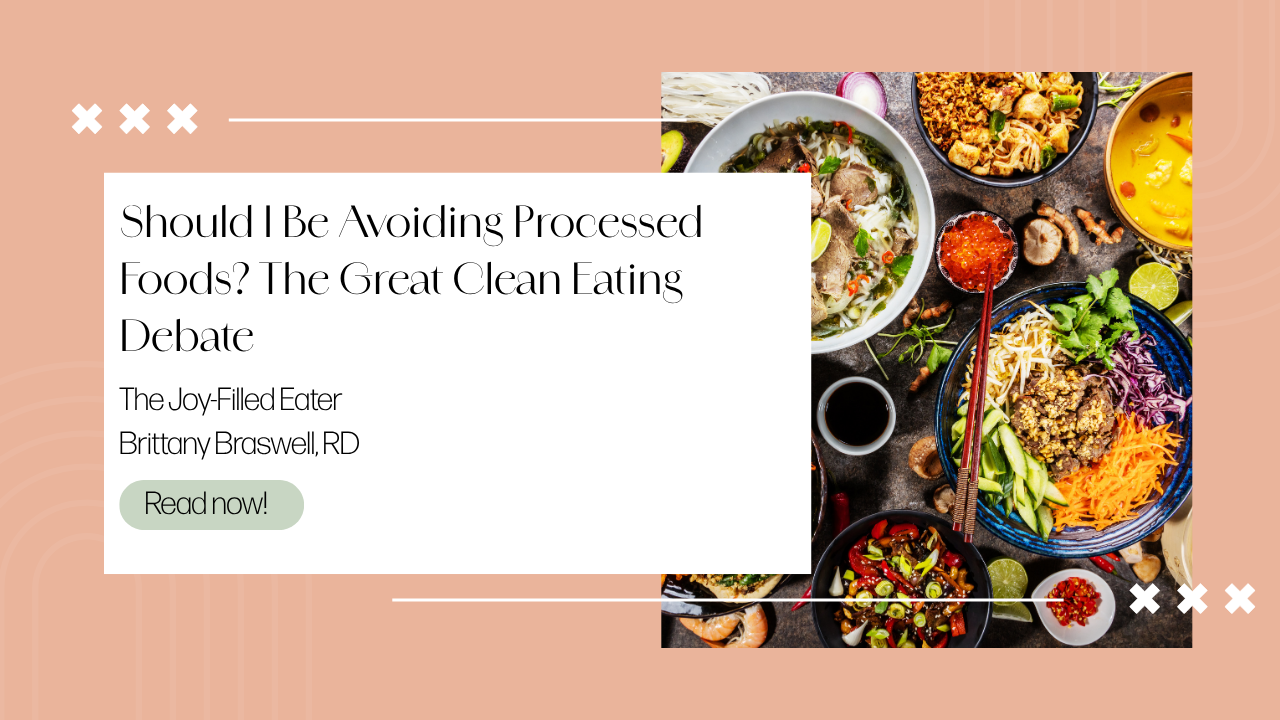
Should I Be Avoiding Processed Foods? The Great Clean Eating Debate
Let’s be honest for a sec.
If you’ve ever stood in the grocery aisle debating between the “organic, non-GMO, clean” label and the one that’s two bucks cheaper, wondering if you’re about to poison your family (or your testimony 😅)… you are so not alone.
Clean eating has become one of those buzzwords that sounds holy and healthy, but deep down can make us feel anything but free.
In episode 187 of the Faith-Filled Food Freedom podcast, I tackled one of the most common food fears I hear from my clients: Should I be avoiding processed foods?
And girl, buckle up, because we’re breaking chains, not bank accounts, today.
What Even Is “Clean Eating,” Anyway?
You’d think after years in the nutrition field, we’d have a universal definition of “clean eating,” right? Nope. 🙃
Everyone seems to define it differently. For some, it’s “only foods from the earth.” For others, it’s “nothing with preservatives, sugar, or that you ...
3 Ways to Help Your Kids Have a Healthier Body Image This School Year

3 Ways to Help Your Kids Have a Healthier Body Image This School Year
If you’ve ever cringed at something your kid came home saying about food or their body after a day at school… friend, I get it.
I’ll never forget the day my son—fresh out of kindergarten—waltzed through the door clutching a worksheet from his “healthy eating lesson.” He proudly showed me where he had circled the “healthy” foods and X’d out the “unhealthy” ones, just like the teacher told him to.
Cue the deep sigh, the slow sink into my chair, and the eye roll (yes, all three happened in quick succession 😅). As a food freedom dietitian and mama who works hard to teach my kids that all foods are morally neutral, this worksheet felt like a flashing neon sign for one of those “We need to talk” moments.
Because here’s the deal—those kinds of messages? They don’t just stay on the worksheet. They sink deep into our kids’ little hearts and minds, shaping how they see food… and eventually, how they see themselves.
And...
Can the Desire to Lose Weight AND Pursue Food Freedom Coexist?

Can the Desire to Lose Weight AND Pursue Food Freedom Coexist?
“I want food freedom… but I also kinda want to lose weight. Is that wrong?”
Oh friend, if I had a dollar for every time a Christian woman whispered this question with a cocktail of guilt, shame, and curiosity—I’d be writing this blog from a beach house in Maui. 🏖️
But in all seriousness, if you’ve been wrestling with this exact thought, I want you to hear me loud and clear:
You are NOT disqualified from pursuing food freedom just because part of you still wants weight loss.
Let’s break this tension down together—with grace, truth, and the guidance of the Holy Spirit (not the scale).
The Honest Truth: You’re Not Alone in This Tension
First, a big ol’ exhale. You’re not the only Christian woman who feels this way. This desire to “want both” is extremely common—especially if you’ve grown up in a performance-based or image-focused environment.
“Brittany, I don’t want to obsess over food anymore... but also, I’d love...
3 Summer Style Hacks to Feel More Confident

3 Summer Style Hacks to Feel More Confident
You don’t need a different body this summer. You need a different perspective.
Whew. Let that sink in for a second, friend.
If the thought of swimsuit season makes you want to grab your comfiest black leggings and oversized T-shirt (even in the blazing July heat 🥵), then keep reading… because this post? It’s written for you.
Whether you’re Googling “how to lose belly fat fast” (no judgment—we’ve all been there), or debating whether it’s actually worth going to the pool because you can’t stand the thought of being seen in a swimsuit, you’re not alone.
But what if I told you that your confidence this summer doesn’t have to come from losing weight or changing your body?
What if it could come from the inside out—through mindset, style choices, and a whole lotta grace?
Let’s dive into a new way to do summer.
☀️ The Lie We’ve Been Sold About Summer & Body Image
Every summer, the same messages creep in...
“You can’t wear that until you l...
Navigating the Intersection of Depression and Disordered Eating

Navigating the Intersection of Depression and Disordered Eating
Hey there, lovely! 🌼 If you’ve ever found yourself caught in a whirlwind of negative thoughts about your body or battling the urge to control your food intake when life feels heavy, you’re not alone. Today, we’re diving deep into a topic that hits close to home: the relationship between depression and disordered eating. Grab your favorite cozy blanket, and let’s spill the tea on how to break free from these burdens!
Understanding the Connection: Depression and Disordered Eating
Let’s start with some real talk. For many of us, the shadows of depression often drag along a friend—disordered eating. It’s like they’re a dynamic duo that’s tough to shake. As we discussed in the podcast, depression can alter our relationship with food, leading us to swing between restricting what we eat and binging on all the things. This creates a whirlwind of guilt and shame that can feel impossible to escape.
Why does this happen? The e...
How Can I Honor God With My Body?

Ah, the big question, right? As a Christian woman, you know that honoring God isn’t just about Sunday mornings and reading scripture—it's about every part of our lives, including how we treat our bodies. But when it comes to health, wellness, and honoring God with our bodies, sometimes the waters can get a little muddy, can’t they? 🤔
Is honoring God with our bodies just about avoiding certain foods or working out to maintain a certain weight? Or does it go a little deeper? ⚠️Spoiler alert: it totally goes deeper! So, let’s dig in, spill some tea, and look at how honoring God with our bodies is actually a freeing, joyful, and worshipful act.
What Does It Mean to "Honor God With Your Body?"
1 Corinthians 6:19-20 tells us, “Do you not know that your bodies are temples of the Holy Spirit, who is in you, whom you have received from God? You are not your own; you were bought at a price. Therefore honor God with your bodies.” Powerful stuff, right? But what does ...
Dealing With Diet Culture in the Church

Have you ever been triggered by negative body or food-related comments made in the pulpit or a Bible study, but didn’t know how to react? If so, this post is for you! Today, I’m going to show you 4 ways diet culture can show up in the “big C church” and offer 3 strategies to battle it.
Before we jump in, I want you to know that questions are super valuable in the study of God’s word. If we don’t ask hard questions and lay Bible teaching against the truth of God’s word, we are letting someone else be our Bible. People don’t always get it right; that’s why I always encourage you to bring what you hear in this podcast and blog to the Lord in prayer and filter it through Biblical truth! Don’t get me wrong—the church is absolutely essential for spiritual maturity and development, but it is also crucial that we dig into the Word ourselves!
Before we can overcome diet culture in the church, we have to be able to recognize it. Here are 4 ways diet culture can pop up:
#1. Jokes and Comme...
7 Signs You May Have A Disordered Relationship With Food

Have You Ever Wondered…
How do you know if you have a disordered relationship with food or your body, and when do you need to reach out for help? You’re about to learn 7 signs that you might have a disordered relationship with food and be introduced to a common misconception that SO many women have towards determining whether or not they need help. Get prepared to be challenged and identify some habits that are not serving you or your health journey so that you can discover true health and your identity in Christ!
But first, let’s start with that common misconception:
“I Don’t Struggle With Disordered Eating Because Of My Body Size.”
This is a HUGE LIE from the enemy that SO many women fall into. Your body size has nothing to do with validating whether or not you struggle with disordered eating! Read that sentence again if you need to. Diet culture wants you to believe that struggling with food and your body is “just something every woman has to deal with”, and that dieting “is...
I'm Brittany!
Brittany Braswell, MS, RDN, LD
Host of Faith-Filled Food Freedom & Creator of The Intern Accelerator
I'm here to help Christian women around the world overcome negative body image and an anxiety-ridden relationship with food so they can finally stop stressing and obsessing over how they look and what they eat.