Should I Be Avoiding Processed Foods? The Great Clean Eating Debate
Should I Be Avoiding Processed Foods? The Great Clean Eating Debate
Let’s be honest for a sec.
If you’ve ever stood in the grocery aisle debating between the “organic, non-GMO, clean” label and the one that’s two bucks cheaper, wondering if you’re about to poison your family (or your testimony 😅)… you are so not alone.
Clean eating has become one of those buzzwords that sounds holy and healthy, but deep down can make us feel anything but free.
In episode 187 of the Faith-Filled Food Freedom podcast, I tackled one of the most common food fears I hear from my clients: Should I be avoiding processed foods?
And girl, buckle up, because we’re breaking chains, not bank accounts, today.
What Even Is “Clean Eating,” Anyway?
You’d think after years in the nutrition field, we’d have a universal definition of “clean eating,” right? Nope. 🙃
Everyone seems to define it differently. For some, it’s “only foods from the earth.” For others, it’s “nothing with preservatives, sugar, or that you can’t pronounce.” (By that logic, good luck with quinoa.)
For the sake of our conversation, we’ll define clean eating as:
Eating foods that are as close to their natural state as possible—often organic, minimally processed, and free from additives or preservatives.
Sounds great, right? But here’s the thing… when clean eating becomes the only acceptable way to eat, it stops being a preference and starts being a prison.
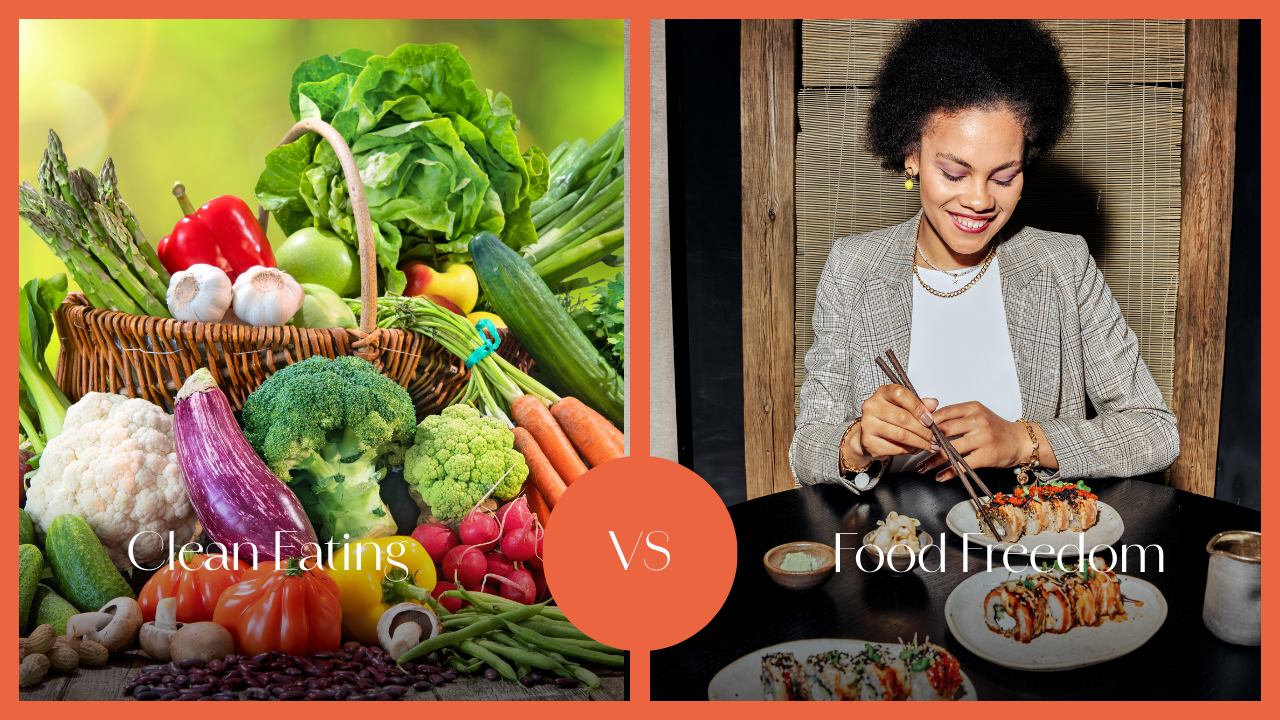
In my house, “clean eating” has an entirely different meaning:
How many napkins do we need to wipe the kids’ faces, and what’s going to make the least mess on my kitchen floor tonight? 😂
Because let’s be real. Our lives are busy, messy, beautiful, and filled with grace… not rigid rules.
When “Healthy” Becomes Harmful: The Fear Behind Clean Eating
Here’s the kicker: most women I talk to who are obsessed with eating “clean” aren’t chasing weight loss, They’re chasing safety.
They’re scared of what might happen if they eat the “wrong” thing.
They’ve read that sugar causes inflammation, processed foods cause disease, and “dirty” foods are a spiritual or physical failure.
But what’s really happening underneath all that food anxiety?
👉 Perfectionism.
Maybe you wouldn’t call yourself a perfectionist (yet), but if you’ve ever:
- Felt guilty for eating something “off-plan,”
- Avoided social gatherings because you didn’t know what food would be there,
- Or spent hours researching the “best” protein powder…
Then friend, you might be striving for a kind of nutritional perfection that isn’t serving you, or your faith.
Orthorexia (the obsession with “pure” or “perfect” eating) is sneaky because it hides under the disguise of health. But perfectionism in any form—food, fitness, faith—can keep us from the freedom Christ already bought for us.
“Therefore, there is now no condemnation for those who are in Christ Jesus.” —Romans 8:1
💡 Reflection Moment: Ask the Lord, “God, where in my life am I still striving for perfect instead of surrendering to Your peace?”
Clean Eating Myths That Need to Go 🙅♀️
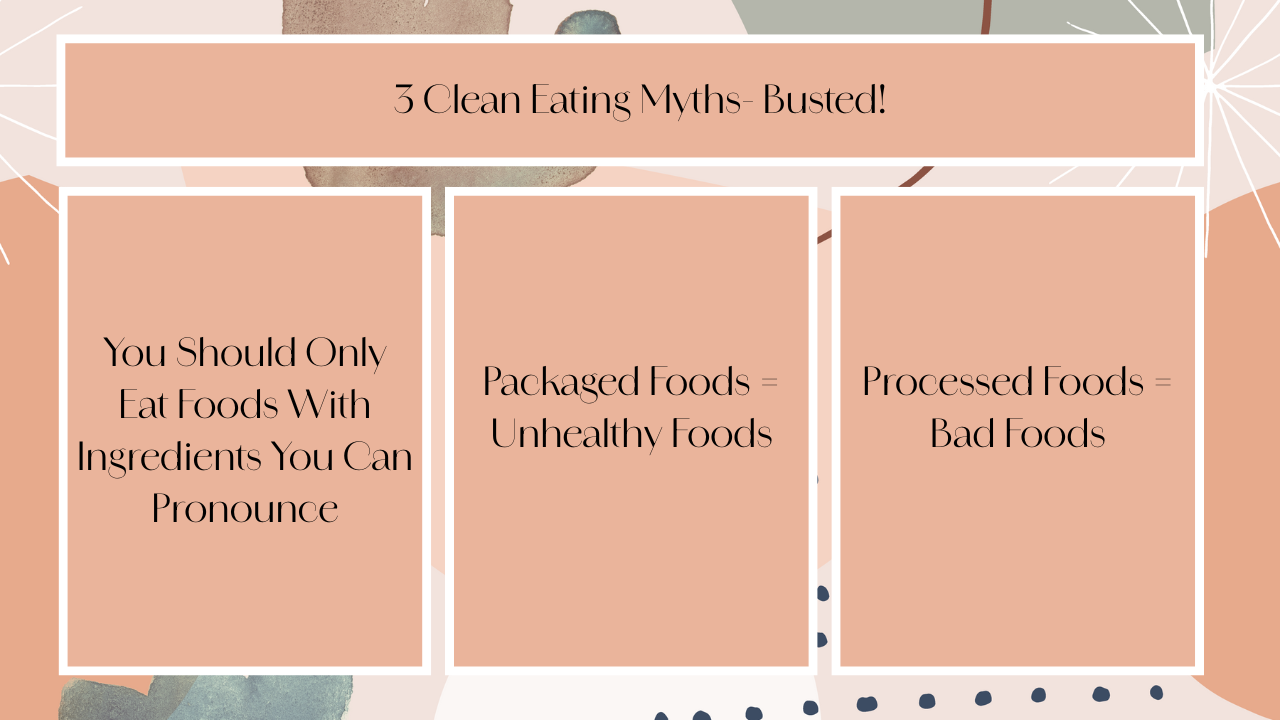
Let’s bust a few common “clean eating” myths that might be tripping you up.
🧃 Myth #1: You Should Only Eat Foods With Ingredients You Can Pronounce
Oh, friend. As a dietitian, this one makes me want to throw my lab coat in the air. 😂
Some of the healthiest foods contain ingredients with long, fancy names --> ascorbic acid (that’s vitamin C), tocopherol (vitamin E), or quercetin (a powerful antioxidant).
Just because it sounds scientific doesn’t mean it’s bad for you. In fact, some of those “hard-to-pronounce” words are the very nutrients your body thrives on.
🍱 Myth #2: Packaged Foods = Unhealthy Foods
Nope!
Packaging is a way to preserve food, not poison it.
Frozen veggies, canned beans, whole-grain pastas. These are all “processed” foods that are nutrient-dense, budget-friendly, and practical for a busy mama who doesn’t have time to shop every 3 days.
Flash-frozen veggies, for example, are picked at their peak ripeness, locking in vitamins and minerals. So when your produce drawer starts looking like a science experiment gone wrong… frozen broccoli for the win! 🥦
🥤 Myth #3: Processed Foods = Bad Foods
Let’s get technical for a sec. The University of Pennsylvania Medical Center defines processed foods as any food that’s been deliberately changed before consumption.
So… that means coffee, tea, applesauce, frozen veggies—all processed.
The word “processed” isn’t the enemy. The question is how it’s processed and whether it helps you nourish your body well.
The bigger danger? When our pursuit of “clean eating” becomes a pursuit of control.
Because here’s the truth: you can’t control your way into peace.
Perfectionism doesn’t equal holiness. Freedom does.
Is Perfectionism Sneaking Into Your Eating Habits?
Take a second and breathe.
I’ve never worked with a client who didn’t struggle with perfectionism in some area of her life. Never.
Maybe for you, it’s fear of failure (“What if I mess up my meal plan?”).
Maybe it’s needing affirmation (“If I eat perfectly, people will think I’m disciplined.”).
Or maybe it’s about control (“If I do everything right, I can avoid sickness or weight gain.”).
But friend, chasing “perfect” is exhausting. It’s not peace.
At the Holy and Whole Women’s Conference, we listened to KB’s song “No Chains”, and y’all, I cried. Because that’s exactly what happens when we surrender our food fears to the Lord. Those chains of shame and guilt? They fall off.
If you ever need a little hype song to remind you that condemnation is not from God, go cue up No Chains by KB.
Shame OFF you, sister. Because there is no condemnation in Christ.
A Faith-Filled Framework for Balanced Nutrition 🥗
Now that we’ve cleared the air (and maybe a few myths), let’s talk about what balanced nutrition actually looks like, without the obsession.
I love referencing Rachel Hartley’s Nutritional Hierarchy of Needs because it helps us prioritize what really matters when it comes to nourishing our bodies.
Step 1: Adequacy — Are You Eating Enough?
Before we stress about kale vs. quinoa, we’ve got to make sure you’re eating enough to sustain basic body functions. Period.
You can’t pursue health if you’re undernourished. This is why skipping meals or “saving calories” for later only backfires. Your body’s not meant to run on empty.
Step 2: Balance — Are You Getting a Mix of Carbs, Protein, and Fat?
Each of these macronutrients plays a different role:
- 🥖 Carbs = Energy
- 🍗 Protein = Repair and strength
- 🥑 Fats = Hormone health and satisfaction
When we cut one out (looking at you, low-carb trend), we throw the whole system off balance.
Step 3: Variety — Are You Allowing Different Foods?
True food freedom thrives on variety.
Choosing from a wide range of foods (not just what feels “safe”) is one of the best indicators of long-term recovery and joy-filled eating.
If your meals look the same every day, it might be time to spice things up (literally and figuratively 😜).
Step 4: Specificity — The Fine-Tuning Stage
Once adequacy, balance, and variety are in place, then we can start fine-tuning specific nutrients for unique needs, like managing blood sugar, improving bone health, or supporting energy levels.
The problem is, most of us skip the first three steps and jump straight to the “perfect diet” part. That’s like trying to build a house starting with the roof!

Developing Body Trust: Listening to God and Your Gut
So how do we move from obsessing about food to trusting our bodies again?
We start by developing Body Wisdom that leads to Body Trust.
Here’s a sneak peek at the 3-part Body Trust Framework I teach inside my Joy-Filled Eater Course:
- Interoceptive Awareness – Learning to recognize your body’s hunger, fullness, and emotional signals.
- Patience – Giving yourself time to rebuild trust (because just like any relationship, it takes time!).
- Submission – Surrendering those signals to the Holy Spirit and asking, “Lord, how can I honor You and my body in this choice?”
This is what sets faith-filled food freedom apart from worldly “intuitive eating.”
We’re not just listening to our bodies. We’re aligning our choices with the One who created them.
The Heart of the Matter ❤️
You can eat the “cleanest” diet on earth and still feel chained by guilt.
You can meal prep like a boss and still miss out on joy-filled fellowship at the dinner table.
If your pursuit of health costs you your peace, your joy, or your connection with others, it’s not health.
So ask yourself:
- Am I trying to eat “clean,” or am I trying to eat perfectly?
- Does my eating pattern leave me nourished or anxious?
- Have I confused physical health with spiritual worthiness?
Friend, Jesus didn’t die for you to live in bondage to food rules. He came so you could walk in freedom.
“If the Son sets you free, you will be free indeed.” —John 8:36
Next Steps Toward Food Freedom
If today’s conversation hit home for you, here’s how to keep growing:
- 🎧 Listen to Episode 69:
Faith-Filled Food Freedom Podcast – “Should I Be Avoiding Processed Foods?” - 💻 Join My Free Facebook Community:
The Food Freedom and Body Image Support for Christian for Women is where women just like you are breaking free from food anxiety and perfectionism—together.
👉community.brittanybraswellrd.com - 🥗 Grab the Nourishing Menus Workshop:
Learn how to plan simple, satisfying meals without falling back into diet mentality or spending hours on Pinterest-perfect plates.
👉https://www.brittanybraswellrd.com/plan - 💛 Explore the Joy-Filled Eater Course:
Your next step toward lasting peace with food, body, and Jesus. You’ll learn how to rebuild body trust, overcome food fears, and walk in Christ-centered freedom.
👉 https://www.brittanybraswellrd.com/course
Stay in touch by subscribing to my personal newsletter, The Full Plate Press
Join over 1000 others and get access to my weekly newsletter with a personal story, BTS sneak peaks, food freedom tips & strategies, riduculous memes, and BONUS goodies from me!
I'm Brittany!
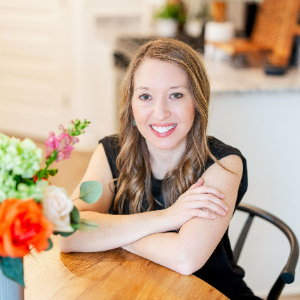
Brittany Braswell, MS, RDN, LD
Host of Faith-Filled Food Freedom & Creator of The Intern Accelerator
I'm here to help Christian women around the world overcome negative body image and an anxiety-ridden relationship with food so they can finally stop stressing and obsessing over how they look and what they eat.