How to Stop Obsessing Over Food: A Faith-Based Guide to Food Freedom
There was a client I worked with once who came to me completely convinced of one thing:
“I think I’m addicted to sugar. I just need to cut it out completely.”
She wasn’t joking. She was tired. Frustrated. Honestly… a little defeated.
Because no matter how hard she tried, she couldn’t seem to “just say no.”
And in her mind, that meant one thing: She lacked willpower.
But here’s what we uncovered together (and this might hit close to home for you):
She wasn’t addicted to sugar.
She was trapped in a cycle of restriction and obsession.
The more she tried to avoid sweets…
The more she thought about them.
The more she labeled them as “bad”…
The more powerful they became.
And every time she did eat them... Cue the guilt. The shame. The “I blew it” spiral.
Friend, if your brain feels like it’s constantly running a background tab labeled food…
You are not broken.
You’re caught in a pattern that makes obsession inevitable.
And today, we’re going to talk about how to break it—in a way that aligns with your faith, your body, and the life God actually created you to live.
What Does It Mean to Obsess Over Food?
Let’s define this in real life terms—not textbook language.
Food obsession isn’t just “thinking about food sometimes.”
It looks more like:
- Constantly planning your next meal (or trying not to)
- Feeling guilt or anxiety after eating certain foods
- Mentally tallying calories, macros, or “good vs. bad” choices
- Replaying what you ate earlier… over and over
- Feeling like food has way more control over you than it should
And if you’re nodding along, here’s something important to understand:
This didn’t come out of nowhere.
In my work as a registered dietitian, I see this pattern constantly—
especially in women who are trying to “be healthy.”
Because somewhere along the way, “health” became:
- Control
- Perfection
- Rules
And not freedom.
Diet culture (yes—even the sneaky “Christianized” version of it) teaches you to:
- Distrust your body
- Moralize food
- Believe that discipline = righteousness
So of course your brain is overwhelmed.
You were never designed to live like that.
The Myth: “If I Just Had More Willpower, I’d Stop Thinking About Food”
Let’s gently dismantle this one, because it’s costing you more than you realize.
Food obsession is not a willpower problem.
It’s a biological + emotional + spiritual response.
Here’s what I mean:
- Biologically: If you’re under-eating or restricting, your brain increases food focus to keep you alive.
- Emotionally: If food is tied to comfort, control, or coping, your brain will keep returning to it.
- Spiritually: If your identity or worth is wrapped up in your body or choices, food becomes a battleground.
So when you say:
“Why can’t I just get it together?”
Your body is like:
“I’m trying to protect you.”
And your soul is like:
“This was never meant to carry your identity.”
Romans 8:1 (ESV) says:
“There is therefore now no condemnation for those who are in Christ Jesus.”
Let that land for a second.
No condemnation. Not even here. Not even with food.
You don’t need more discipline.
You need a different foundation.
How Restriction Fuels the Cycle of Obsession
Let’s talk about what’s actually happening under the surface.
Because this is the part most women miss.
When you restrict food—whether physically or mentally—you don’t create control.
You create fixation.
🍽️ Physical Restriction
Skipping meals. Cutting calories. Avoiding entire food groups.
Your brain responds by increasing:
- Cravings
- Food thoughts
- Urgency around eating
🧠 Mental Restriction
Even if you do eat the food…
If your brain is saying:
- “I shouldn’t be eating this”
- “I need to make up for this later”
That still counts as restriction.
🙏🏻 Spiritual Restriction
This is the one that hits differently.
When food becomes:
- “Good” vs. “sinful”
- “Clean” vs. “bad”
You start attaching moral value to something God created as neutral.
And suddenly, eating a cookie feels like a character flaw.
Friend, that’s not conviction.
That’s confusion.
The Common Mistake: Making Food the Enemy
If you’ve ever said:
- “I just can’t have that in the house”
- “I need to be stricter”
- “That food is my weakness”
This section is for you.
Because the moment you make food the enemy…
You unintentionally give it power.
And here’s what happens:
- You feel anxious around certain foods
- You swing between “being good” and “falling off track”
- You disconnect from your body’s actual needs
But more than that?
You start drifting away from God’s design for nourishment.
Genesis 1:29 (ESV):
“Behold, I have given you every plant yielding seed… You shall have them for food.”
Not fear.
Not shame.
Not control.
Provision.
Food was never meant to be something you battle all day.
It was meant to fuel you so you can live your life.
5 Faith-Based Steps to Break Free from Food Obsession
Let’s talk about what actually helps—without turning this into another rulebook.
- Nourish your body consistently. Regular meals rebuild trust with your body and reduce biological urgency around food.
- Renew your mind through Scripture. Romans 12:2 (ESV): “Do not be conformed to this world, but be transformed by the renewal of your mind…” Your brain literally rewires based on what you repeatedly think—this is where your Reticular Activating System comes into play.
- Shift your self-talk. Replace “I have no control” with truth: “I am learning to care for my body with wisdom and grace.”
- Invite God into your eating journey. Not as a rule enforcer—but as your source of peace, guidance, and identity.
- Get support from someone who understands both faith and food freedom. Because you were never meant to do this alone.
READY FOR REAL CHANGE (NOT JUST MORE INFORMATION)?
If you’re tired of trying to figure this out on your own…
👉 Join The Joy-Filled Eater Course:
https://www.brittanybraswellrd.com/course
Inside, I walk you step-by-step through the exact process I’ve used to help women:
- Stop obsessing over food
- Heal their relationship with their body
- Grow closer to God in the process
This isn’t another meal plan.
This is freedom.
What Food Freedom Looks Like in Real Life
Let me show you what’s possible.
Because this isn’t theoretical—it’s happening for real women just like you.
One client shared that before this work:
- Food and body thoughts took up 90% of her brain space
- She couldn’t focus in church
- She avoided social situations
And now?
- She has her brain space back
- She feels close to God again
- She can go to a restaurant and actually be present
Another said:
“I went from barely surviving to actually thriving.”
And maybe my favorite:
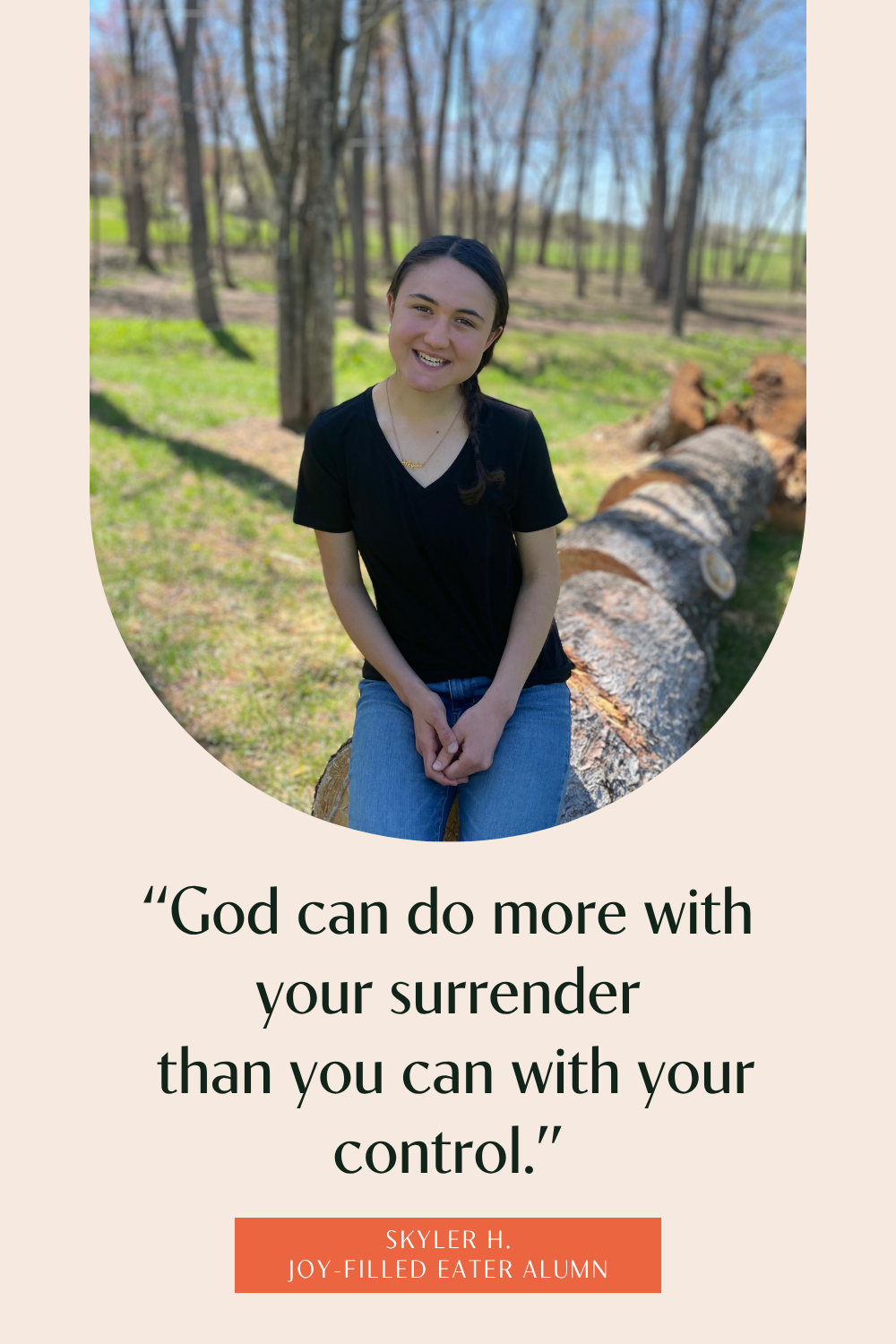
“God can do so much more with your surrender than you can do with your control.”
This is what food freedom looks like:
- Peace instead of panic around food
- Flexibility instead of rigidity
- Presence instead of preoccupation
- Joy instead of guilt
🖼️🖼️🖼️🖼️🖼️🖼️🖼️🖼️🖼️🖼️🖼️🖼️

Frequently Asked Questions
Is food freedom the same as eating whatever I want, whenever I want?
No. It’s about trusting your body and making choices from wisdom—not fear or rules.
Can I honor God with my food choices without obsessing over them?
Yes. In fact, that’s the goal—stewardship without striving.
What if I still want to lose weight—can I pursue food freedom too?
We focus first on healing your relationship with food. Sustainable physical changes often follow—but not through obsession.
Is it wrong to care about health if I’m working on food freedom?
Not at all. But true health includes:
- Physical
- Mental
- Spiritual
You can’t ignore two-thirds of the equation and expect peace.
Finding Freedom: Your Journey Starts with Grace
If you take nothing else from this post, take this:
You don’t have to earn your way out of food obsession.
You don’t fix this with:
- More rules
- More restriction
- More pressure
You start with grace.
2 Corinthians 12:9 (ESV):
“My grace is sufficient for you, for my power is made perfect in weakness.”
This journey?
It’s not about becoming the most disciplined version of yourself.
It’s about becoming free.
And that starts with one decision:
👉 To stop doing this alone.
📦 YOUR NEXT STEP TO FOOD FREEDOM
If you’re ready to stop overthinking food and start experiencing real peace…
👉 Join The Joy-Filled Eater Course:
https://www.brittanybraswellrd.com/course
Or come get support inside my free community:
👉 Food Freedom & Body Image Support for Christian Women
https://community.brittanybraswellrd.com
You don’t have to keep living this way.
Freedom is possible.
And friend?
It’s so worth it.
Stay in touch by subscribing to my personal newsletter, The Full Plate Press
Join over 1000 others and get access to my weekly newsletter with a personal story, BTS sneak peaks, food freedom tips & strategies, riduculous memes, and BONUS goodies from me!
I'm Brittany!
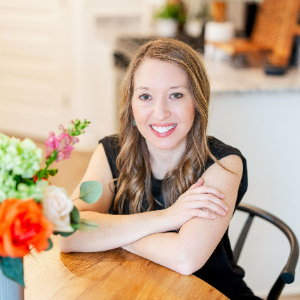
Brittany Braswell, MS, RDN, LD
Host of Faith-Filled Food Freedom & Creator of The Intern Accelerator
I'm here to help Christian women around the world overcome negative body image and an anxiety-ridden relationship with food so they can finally stop stressing and obsessing over how they look and what they eat.