How to Get Started Strength Training Without Falling Back Into Body Obsession
If the phrase “strength training” immediately makes you picture a sweaty warehouse gym full of grunting gym bros slamming barbells while you awkwardly clutch your little 5-pound dumbbells in the corner… friend, you are not alone. 😅
For so many Christian women I work with, the idea of strength training feels tangled up in fear.
Fear of getting bulky.
Fear of doing it wrong.
Fear of injury.
Fear of becoming obsessive again.
Fear of walking back into the same toxic “change your body at all costs” mentality they’ve worked so hard to break free from.
And honestly? That fear makes sense.
Especially if you’ve spent years trapped in diet culture believing exercise was primarily about shrinking yourself, earning your food, burning calories, or “fixing” your body.
But here’s the truth I want you to hear today:
Strength training does not have to become another form of body obsession.
In fact, when approached from a Christ-centered, freedom-focused perspective, strength training can actually become a beautiful tool for supporting your health, reducing stress, building confidence, and helping you reconnect with your body in a more respectful and sustainable way.
On a recent episode of the Faith-Filled Food Freedom Podcast, I sat down with Registered Dietitian and strength coach Rachel to talk about exactly this: how to get started strength training without spiraling into comparison, perfectionism, or body fixation.
And whew. This conversation was GOOD.
So let’s break it down.
Why Strength Training Feels So Intimidating for Women
Can we just say it out loud?
Walking into a weight room can feel wildly uncomfortable.
Especially when:
- you’ve never lifted weights before
- you don’t know how to use the equipment
- everyone else seems to know exactly what they’re doing
- you’re worried people are watching you
- you’ve spent years believing cardio was the “right” way to exercise
Oy vey.
Rachel shared something during our conversation that I think so many women need to hear:
“You have just as much right to be there as anybody else in the gym.”
Read that again.
You do not have to “earn” your place in the weight room.
You do not have to look fit first.
You do not need matching workout sets and a green juice in hand. 😉
You belong there simply because you are a human being worthy of caring for your body.
And honestly? Sometimes stepping into spaces that feel uncomfortable is part of the healing process.
Not because discomfort automatically equals growth. But because food freedom and body image healing often require us to stop living inside the tiny little comfort zone diet culture created for us.
Freedom usually lives on the other side of unfamiliar.
What Strength Training Actually Means (Hint: It’s Not Just Heavy Barbells)
One of the biggest misconceptions about strength training is that it only “counts” if you’re lifting super heavy weights.
Not true.
Rachel explained this beautifully on the podcast:
Heavy is relative.
For one woman, “heavy” might be a 3-pound dumbbell.
For another, it might be a loaded barbell.
The point is not to prove something. The point is to challenge your body appropriately over time.
That’s it.
Strength training simply means using resistance to help your muscles grow stronger.
That resistance could come from:
- dumbbells
- resistance bands
- kettlebells
- bodyweight exercises
- machines at the gym
You do not have to become a powerlifter overnight to benefit from strength training.
Whaaaat?! I know. 😅
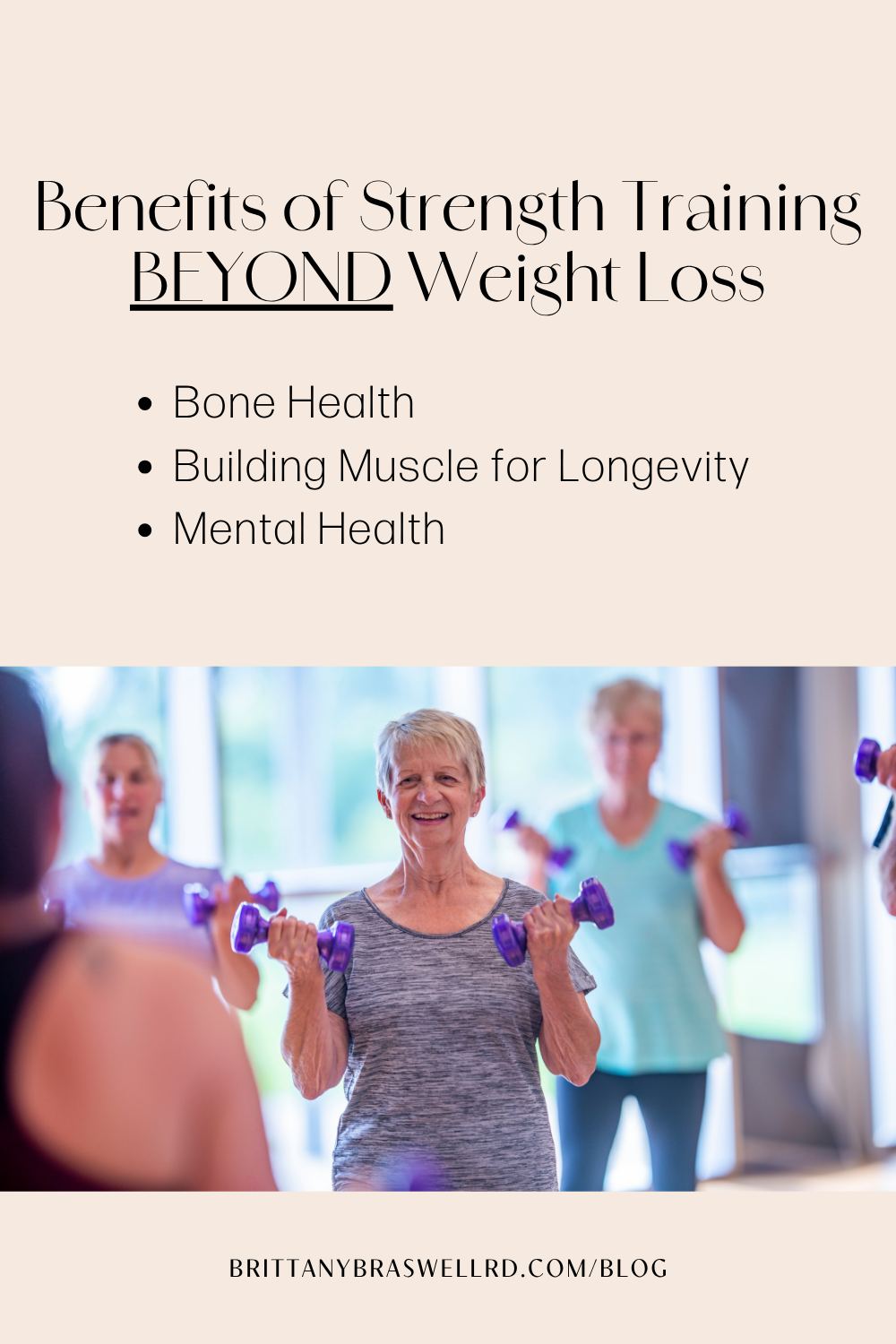
The Benefits of Strength Training Beyond Weight Loss
Here’s where I really want my sweet girls who have struggled with disordered eating to lean in.
Because if your brain immediately goes:
“But will it make me lose weight?”
“But will I look toned?”
“But how will it change my body?”
I gently want to invite you to zoom out for a second.
Your body is more than an aesthetic project.
And strength training offers benefits that go far beyond appearance.
Strength Training Supports Bone Health
This is a HUGE one.
Many women with a history of chronic dieting, under-eating, restrictive eating patterns, or disordered eating may experience low bone density, osteopenia, or even osteoporosis.
And unfortunately, that’s not something we talk about nearly enough in wellness spaces.
Strength training places healthy stress on the bones, which signals the body to strengthen them over time.
Think of it like your body receiving a message:
“Hey friend, we need stronger support systems over here.”
This is especially important for women as we age and move through perimenopause and menopause.
Strength Training Helps Build Muscle for Longevity
Rachel used one of my favorite analogies during our conversation: muscle acts like a sponge for blood sugar.
So as women age — and blood sugar regulation naturally becomes more challenging hormonally — having muscle mass becomes incredibly supportive metabolically.
But beyond that?
Building muscle helps support:
- balance
- stability
- injury prevention
- mobility
- energy levels
- functional movement as you age
Because friend… we are not just training for swimsuit season.
We are training for life.
For picking up toddlers.
For carrying groceries.
For getting off the floor without pain.
For staying mobile and strong decades from now.
That perspective shift changes everything.
The Mental Health Benefits of Strength Training
This part of the conversation honestly hit me hard.
Rachel shared how strength training became one of the tools that helped her navigate an incredibly stressful season while parenting.
And I know so many moms reading this can relate.
Sometimes stress doesn’t just live in your mind.
It lives in your shoulders.
Your jaw.
Your chest.
Your nervous system.
Movement can become a way to physically release tension and reconnect with your body in a grounded, supportive way.
Not punishment.
Not compensation.
Not “earning” food.
Just care.
And that is such a different posture than what diet culture teaches us.
How to Start Strength Training Without Becoming Obsessed
Okay. Let’s talk practically.
Because if you have a history of body image struggles or disordered eating, this part matters deeply.
1. Unfollow Fitness Influencers That Trigger Comparison
Rachel did not sugarcoat this one. 😂
One of her first recommendations?
Stop following fitness influencers who constantly push:
- “waist snatching”
- shrinking your body
- “glow up” transformations
- unrealistic muscle-building promises
- obsessive body checking content
Because even if it looks “healthy,” comparison can quietly fuel body obsession.
And for women healing their relationship with food and body image, constantly consuming appearance-focused fitness content can become incredibly dysregulating.
Your healing matters more than staying updated on somebody’s glute gains.
2. Focus on Strength — Not Shrinking
One of the healthiest mindset shifts you can make is learning to ask:
“What can my body do?”
instead of
“How can I make my body look different?”
That shift may sound subtle, but spiritually and emotionally? It’s massive.
Strength training from a freedom-centered mindset looks like:
- increasing energy
- supporting health
- building confidence
- reducing stress
- improving functionality
- honoring your body
Not obsessively chasing thinness.
3. Start Small (Seriously Small)
Friend, you do not need a six-day workout split and a gallon water jug to begin. 😅
Rachel recommends beginners start with:
- light weights
- high reps
- simple movement patterns
- short workouts
The goal at first is simply teaching your body how to move safely and consistently.
Not “going hard.”
Not proving yourself.
Not destroying your body in the name of wellness.
Sometimes the healthiest thing you can do is start gently.
4. You Don’t Need to Spend Hours in the Gym
Can I get an amen from the busy moms?
One of my favorite parts of this conversation was Rachel emphasizing that most of her clients only strength train about 2–3 times per week.
And many of their workouts are around 30–45 minutes.
That’s it.
Because contrary to what fitness culture screams at us:
more is not always better.
Especially for women already living with:
- stress
- anxiety
- full schedules
- nervous system dysregulation
- perfectionistic tendencies
Sometimes “balanced consistency” is far healthier than extreme intensity.
5. Consider Support If You Need It
If you feel nervous about injury or form, it’s completely okay to ask for help.
Rachel recommended:
- hiring a trainer for a few form-check sessions
- working virtually with a coach
- starting with bodyweight exercises at home
- learning slowly over time
You do not have to know everything before you begin.
And honestly? Most people at the gym are far more focused on themselves than on watching you.
Promise. 😉
Cardio vs. Strength Training: Which Is Better?
I loved Rachel’s answer to this question because it was refreshingly balanced.
Her perspective?
You need both.
Strength training helps build muscle and support longevity.
Cardio supports cardiovascular health and endurance.
But here’s the important distinction:
Cardio primarily tells your body:
“Become more efficient.”
Strength training tells your body:
“We need more strength and support.”
Neither is morally superior.
And movement should never become a punishment system anyway.
A Gentle Reminder for the Woman Healing Her Relationship With Exercise
If you’ve had a complicated relationship with exercise before, I want you to hear me clearly:
You are allowed to approach movement differently now.
You are allowed to:
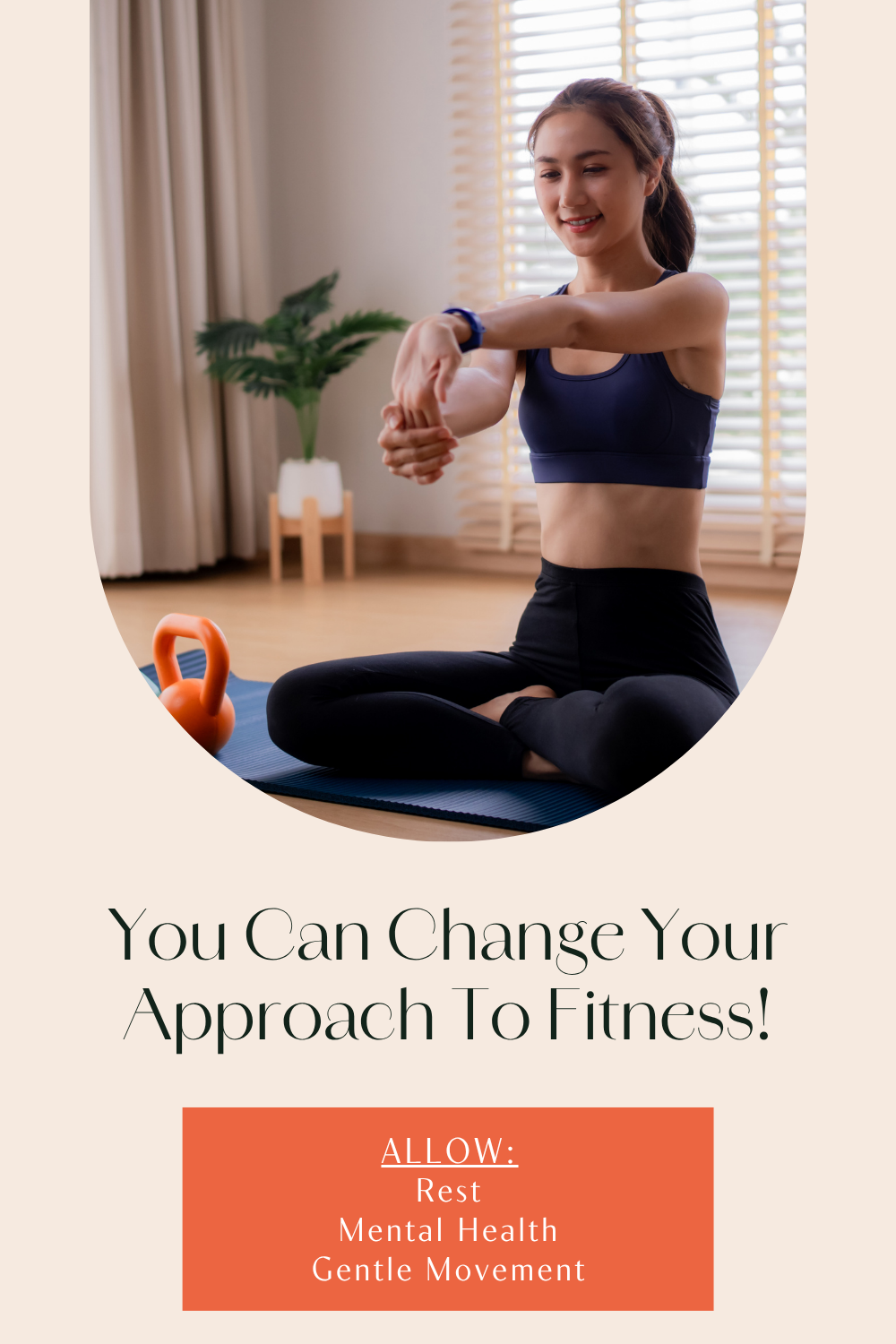
- rest
- move gently
- prioritize mental health
- choose sustainability
- stop tracking calories burned
- unfollow triggering accounts
- take breaks
- redefine what “healthy” means
Your worth was never dependent on your workout routine.
Not before.
Not now.
Not ever.
And while movement can absolutely support health, it should never replace your identity in Christ.
Because your body is not a project to obsess over.
It is a gift to steward.
Final Encouragement: You Don’t Have to Be Fearful of Strength Training
Friend, if strength training has felt intimidating, overwhelming, or triggering in the past, I hope this conversation helped you breathe a little easier.
You do not have to become obsessed with your body to become stronger.
You do not need to chase perfection to support your health.
And you absolutely do not need to earn your food or shrink yourself to deserve care.
Sometimes healing looks like learning to move your body from a place of freedom instead of fear.
And honestly? That kind of strength runs far deeper than muscle.
Want More Support on Your Food Freedom Journey?
🎧 Listen to the Faith-Filled Food Freedom Podcast on Apple Podcasts for more conversations about food freedom, body image, gentle nutrition, and healing your relationship with food through a Christ-centered lens.
💬 Join our free community of Christian women pursuing food freedom together inside the Faith-Filled Food Freedom Community
And if today’s conversation encouraged you, send this post to a friend who’s been afraid to step into the weight room. You never know who might need the reminder that strength doesn’t have to come at the cost of freedom.
Stay in touch by subscribing to my personal newsletter, The Full Plate Press
Join over 1000 others and get access to my weekly newsletter with a personal story, BTS sneak peaks, food freedom tips & strategies, riduculous memes, and BONUS goodies from me!
I'm Brittany!
Brittany Braswell, MS, RDN, LD
Host of Faith-Filled Food Freedom & Creator of The Intern Accelerator
I'm here to help Christian women around the world overcome negative body image and an anxiety-ridden relationship with food so they can finally stop stressing and obsessing over how they look and what they eat.