Overcoming the Fear of Weight Gain: A Christ-Centered Path to Peace

There was a moment in a coaching call I will never forget.
She sat there, shoulders slightly hunched, voice steady—but only just.
“I think I’m always going to hate my body.”
Not because of something extreme.
Not because of a diagnosis or a major life event.
But because of her weight.
She went on to explain that every time the number on the scale crept up—even slightly—it felt like proof of something deeper. Proof that she was failing. Proof that she was less attractive. Less disciplined. Less… worthy.
And then she said something that hit even deeper:
“I don’t think I can fully trust God with this part of my life.”
Not because she didn’t love Him.
But because fear had gotten louder than truth.
If you have ever felt that tension—the push and pull between wanting peace with your body and feeling absolutely terrified of weight gain—you are not alone.
And more importantly, you are not stuck.
This is not just about your body.
It is not even just about food.
This is about freedom.
And in this post, we are going to walk through a grace-filled, biblically grounded path forward—one that helps you loosen the grip of fear, renew your mind, and experience peace in your body again.
What Is the Fear of Weight Gain Really About?
Let’s gently but honestly name what this fear really is.
Because it is rarely just about the number on the scale.
For most women I work with, the fear of weight gain is actually tied to:
- Identity – “If my body changes, who am I then?”
- Control – “If I cannot control my weight, what else will spiral?”
- Acceptance – “Will I still be loved, respected, or desired?”
Weight becomes a symbol, not just a physical change.
It represents things like:
- Being seen differently
- Losing approval
- Feeling “out of control”
- Or even believing you have somehow failed
And here is where it gets even more layered.
Because many Christian women did not just absorb these beliefs from culture…
They absorbed them from family conversations, church environments, and even well-meaning spiritual language.
So instead of asking, “What do I believe about my body?”
I want you to consider:
What does weight gain mean to me?
Because until you uncover the meaning, the fear will keep running in the background.
And Scripture invites us to bring even those hidden beliefs into the light.
The Myth: “God Wants Me to Be Thin to Be Healthy or Holy”
Let’s say this plainly:
There is no version of the Bible that includes a weight requirement for being a “good Christian.”
No BMI chart in the references section.
No “ideal body fat percentage.”
No spiritual gold star for shrinking yourself.
And yet… this belief quietly lingers.
It often shows up dressed in spiritual language like:
- “I just want to honor my body.”
- “I need more discipline.”
- “I should take better care of myself.”
Now hear me clearly—those desires are not wrong.
But when they become tied to shrinking your body, they subtly shift from stewardship to striving.
One of the most commonly misused passages in this conversation is:
“Or do you not know that your body is a temple of the Holy Spirit within you, whom you have from God? You are not your own, for you were bought with a price. So glorify God in your body.” (1 Corinthians 6:19–20, ESV)
This verse is not about:
- Weight
- Body size
- Or appearance
It's about belonging.
It is about the reality that your body is already valuable—not because of how it looks, but because of Whose it is.
And when we distort this truth into a pressure to control or shrink our bodies, we miss the heart of the Gospel:
God’s love is not size-dependent.
Health is not holiness.
Thinness is not righteousness.
And your body is not a project God is waiting for you to fix.
How Diet Culture Fuels Fear and Distrust
Diet culture is loud.
Even when you think you've stepped away from it, it has a way of sneaking back in through:
- Social media
- “Wellness” trends
- Fitness messaging
- Even Christian books or devotionals centered around discipline and health
And here's what it does over time: It teaches you to distrust your body.
You start questioning:
- Hunger cues
- Fullness signals
- Food choices
- Even your own thoughts
And the more you try to control your body, the more your brain becomes preoccupied with it.
This is why restriction often leads to:
- Increased food obsession
- Heightened anxiety around eating
- Greater fear of weight gain
Because your body is not broken.
It is responding exactly how it was designed to respond to perceived scarcity.
Meanwhile, Scripture is pointing you toward something entirely different:
- Grace instead of striving
- Freedom instead of fear
- Trust instead of control
Which is why one of the most powerful things you can do is audit your influences.
Ask yourself:
- Who or what is shaping how I think about my body?
- Does this align with truth—or fear?
The Common Mistake: Making Health a Moral Issue
This is one of the sneakiest traps.
Because it often feels like you are “doing the right thing.”
You start labeling foods as “good” or “bad", workouts as “earned” or “missed”, and body changes as “success” or “failure”
And without realizing it, health becomes moralized.
Which means:
- Eating a certain way feels virtuous
- Not doing so feels like a failure
And suddenly, your relationship with food and your body is no longer neutral.
It is charged with guilt, shame, and pressure.
This is where many women get stuck spiritually, too.
Because instead of growing in their relationship with God, they are:
- Overanalyzing every bite
- Constantly evaluating their body
- Living in a quiet cycle of guilt and “trying again tomorrow”
What started as a desire to “honor God” becomes a distraction from actually walking with Him.
A redemptive perspective looks different.
It says:
- You can care about your health without obsessing over it
- You can nourish your body without controlling it
- You can pursue stewardship without attaching your worth to outcomes
5 Steps to Loosen the Grip of Weight Gain Fear
This is where we begin shifting from awareness to transformation.
Not perfection. Not overnight change.
But intentional, grace-filled movement forward.
1. Identify the root lies and replace them with truth
Fear thrives in vagueness.
But when you name the lie, you can confront it.
Maybe it sounds like, “If I gain weight, I won't be loved", or “My body determines my value.”
Now bring in truth.
“But the Lord said to Samuel, ‘Do not look on his appearance or on the height of his stature… For the Lord sees not as man sees: man looks on the outward appearance, but the Lord looks on the heart.’” (1 Samuel 16:7, ESV)
2. Practice body neutrality and gratitude
You do not have to love how your body looks to begin respecting it.
Start with what your body does:
- Carries you through your day
- Allows you to serve others
- Enables connection, movement, and presence
Gratitude shifts your focus from criticism to stewardship.
3. Focus on health-promoting behaviors, not weight loss outcomes
Instead of asking: “Is this making me lose weight?”
Ask: “Is this supporting my overall well-being?”
Think:
- Eating consistently
- Getting enough rest
- Moving your body in ways that feel good
- Hydration, nourishment, sustainability
These are anchors that bring stability, regardless of what your body does.
4. Invite God into your body image journey
This is not something you are meant to white-knuckle.
Bring it to Him.
“Cast all your anxieties on him, because he cares for you.” (1 Peter 5:7, ESV)
That includes: your fear of weight gain, your frustration with your body, and your desire for peace
Surrender is not passive. It is deeply active trust.
5. Surround yourself with truth-filled voices
You cannot out-hear lies you are constantly listening to.
This might look like:
- Curating your social media
- Being mindful of books and content you consume
- Joining communities that reinforce truth
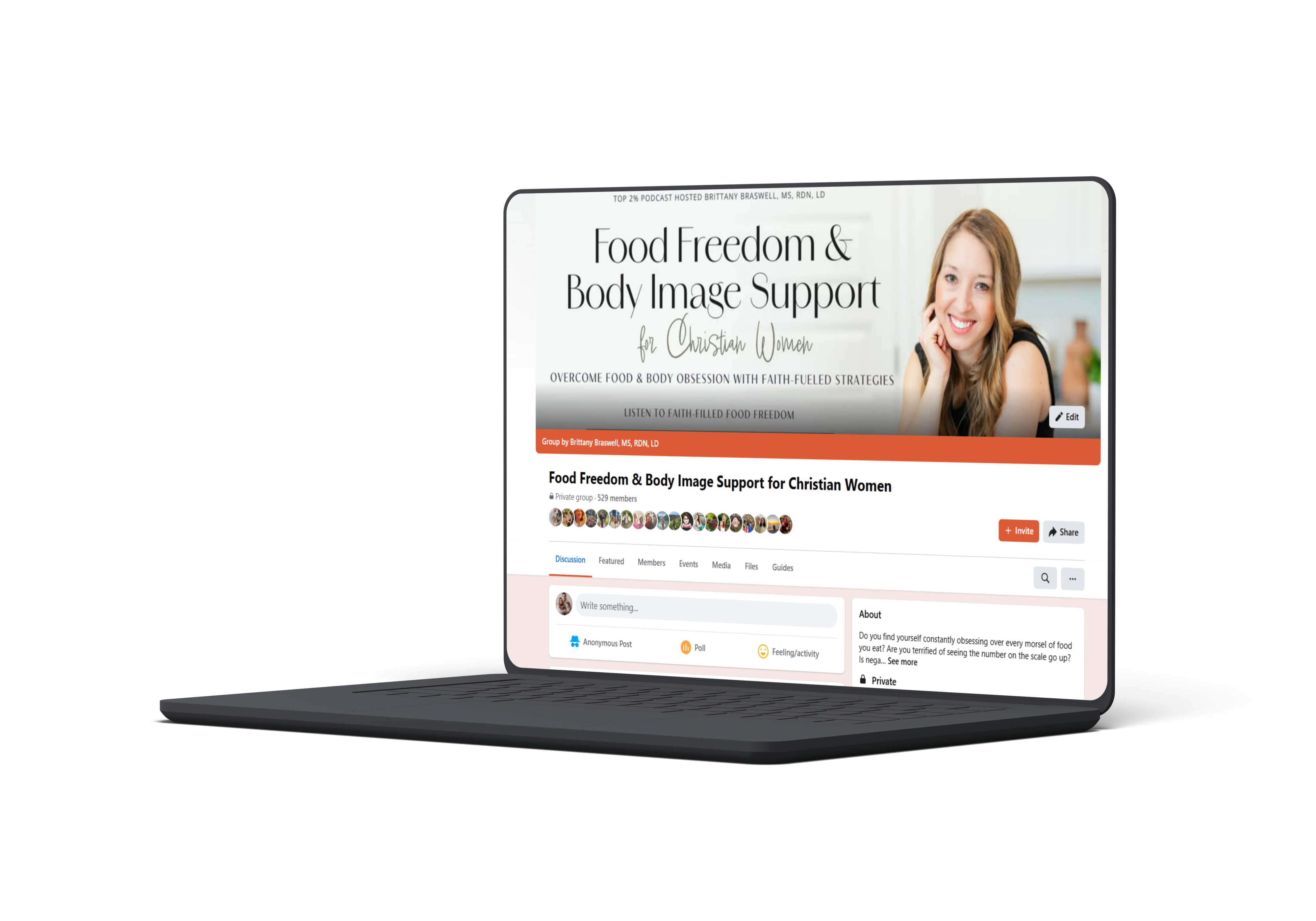
👉 Join my free community here: Food Freedom & Body Image Support for Christian Women
What Peace with Your Body Really Looks Like
Let me tell you about “Sharon.”
She came into coaching convinced that she could not care for her body until she liked it.
But over time, something shifted.
She started:
- Eating more consistently
- Speaking to herself with more compassion
- Caring for her body even on the days she did not like it
And slowly, something unexpected happened.
She began to appreciate her body.
Not because it changed dramatically.
But because her posture toward it changed.
Peace with your body does not mean you love every photo or you never have a hard day
It looks like:
- Less mental noise around food and your body
- Getting dressed in 5 minutes instead of 45
- Being present at dinner instead of calculating every bite
- Eating a variety of foods without fear
It creates space.
Space to be present with your family, grow in your faith, and actually live your life.
And that kind of peace is deeply spiritual.
Frequently Asked Questions
Is it possible to care about health without obsessing over weight?
Yes, absolutely.
This is something I break down further in this episode of Faith-Filled Food Freedom:
👉 Episode 205 - If You Want Food Freedom This Year, Stop Chasing Motivation and Start Doing These 7 Things
You can pursue health in a way that is sustainable, flexible, and rooted in wisdom, not fear.
How do I respond to family or church members who focus on body size?
Set boundaries. And stick to them.
That might sound like:
- Changing the subject
- Politely disengaging
- Or directly communicating that those conversations are not helpful for you
You do not need to carry other people’s beliefs about bodies.
What if my body is changing due to age, hormones, or healing?
Bodies change.
That's not failure. That's reality. And it means you're still breathing, so you still have a purpose to fulfill.
In many cases, it's also a sign of healing, nourishment, and restoration.
Your goal is not to stop change.
It is to learn how to walk with God through it.
How do I trust God with my body when I feel out of control?
Trust is built in small moments.
Moments where you:
- Choose truth over fear
- Choose nourishment over restriction
- Choose surrender over striving
And over time, those moments compound into confidence.
Final Encouragement: You Were Never Meant to Be Defined by a Number
If you take nothing else from this post, take this:
Your worth was never tied to your weight. And it never will be.
Not before.
Not now.
Not ever.
“Do not be conformed to this world, but be transformed by the renewal of your mind…” (Romans 12:2, ESV)
This is the work.
Not changing your body.
But renewing your mind.
Because when your mind begins to shift, (1) fear loosens, (2) peace grows, and (3) freedom becomes possible.
And if you're ready to stop circling this struggle on your own…
If you're ready for clear, faith-based guidance that helps you:
- Break free from food obsession
- Heal your body image
- And finally feel at peace in your body
👉 Click HERE to join me inside The Joy-Filled Eater Course.
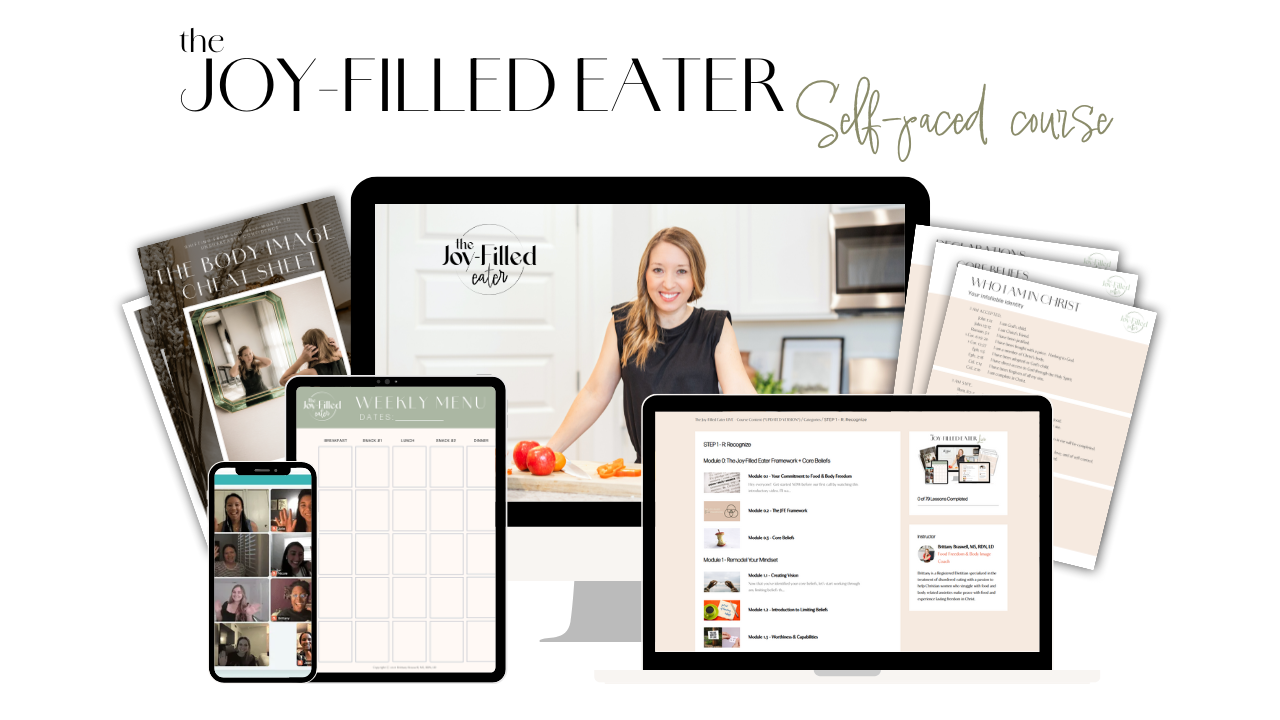
This is where we take everything you are beginning to understand…
And help you actually live it out.
You do not have to keep living in fear.
Peace is possible.
Freedom is available.
And it starts with the next step you are willing to take.
Stay in touch by subscribing to my personal newsletter, The Full Plate Press
Join over 1000 others and get access to my weekly newsletter with a personal story, BTS sneak peaks, food freedom tips & strategies, riduculous memes, and BONUS goodies from me!
I'm Brittany!
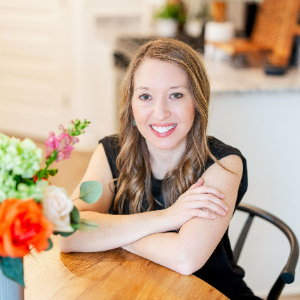
Brittany Braswell, MS, RDN, LD
Host of Faith-Filled Food Freedom & Creator of The Intern Accelerator
I'm here to help Christian women around the world overcome negative body image and an anxiety-ridden relationship with food so they can finally stop stressing and obsessing over how they look and what they eat.