What Foods Are OK to Eat (and Not Eat)? My Daughter's Surprisingly Wise Answer
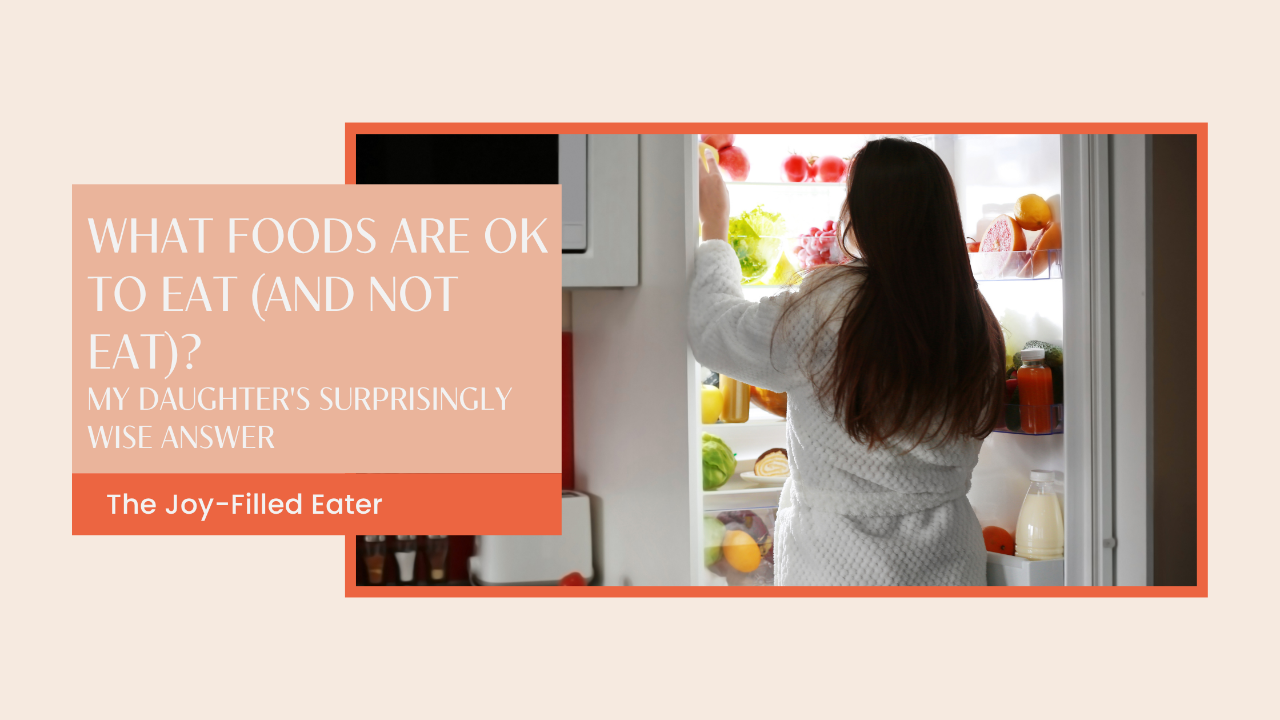
Have you ever found yourself standing in your kitchen staring into the pantry, mentally sorting foods into categories?
Good foods.
Bad foods.
Foods you should eat.
Foods you shouldn't eat.
Foods you've "been good" with.
Foods you've "fallen off track" with.
Friend, if that's you, can I lovingly tell you something?
You're not alone.
In fact, so many of the Christian women I work with spend hours every day trying to figure out what they should and shouldn't eat. They carry around an exhausting mental checklist of food rules, diet plans, nutrition advice from social media, and well-meaning suggestions from friends.
And honestly?
It's exhausting.
But recently, I had a conversation with someone who offered one of the simplest and wisest perspectives I've heard in a long time.
My 6-year-old daughter.
Yep. My sweet little girl unexpectedly dropped a food freedom truth bomb that I think every woman struggling with food anxiety needs to hear.
And it all started during her very first appearance on the Faith-Filled Food Freedom podcast.
What Foods Should You Never Eat?
When my daughter Callie joined me for a mini podcast episode, we started talking about what I do as a dietitian.
I explained that I help people understand nutrition, food freedom, and how all foods fit.
Then I asked her a question.
"What foods should we not eat?"
Now, if you've been listening to diet culture for any length of time, you might expect answers like:
- Sugar
- Bread
- Processed foods
- Fast food
- Desserts
- Carbs
You know...the usual suspects.
But Callie had a completely different answer.
Without hesitation, she said:
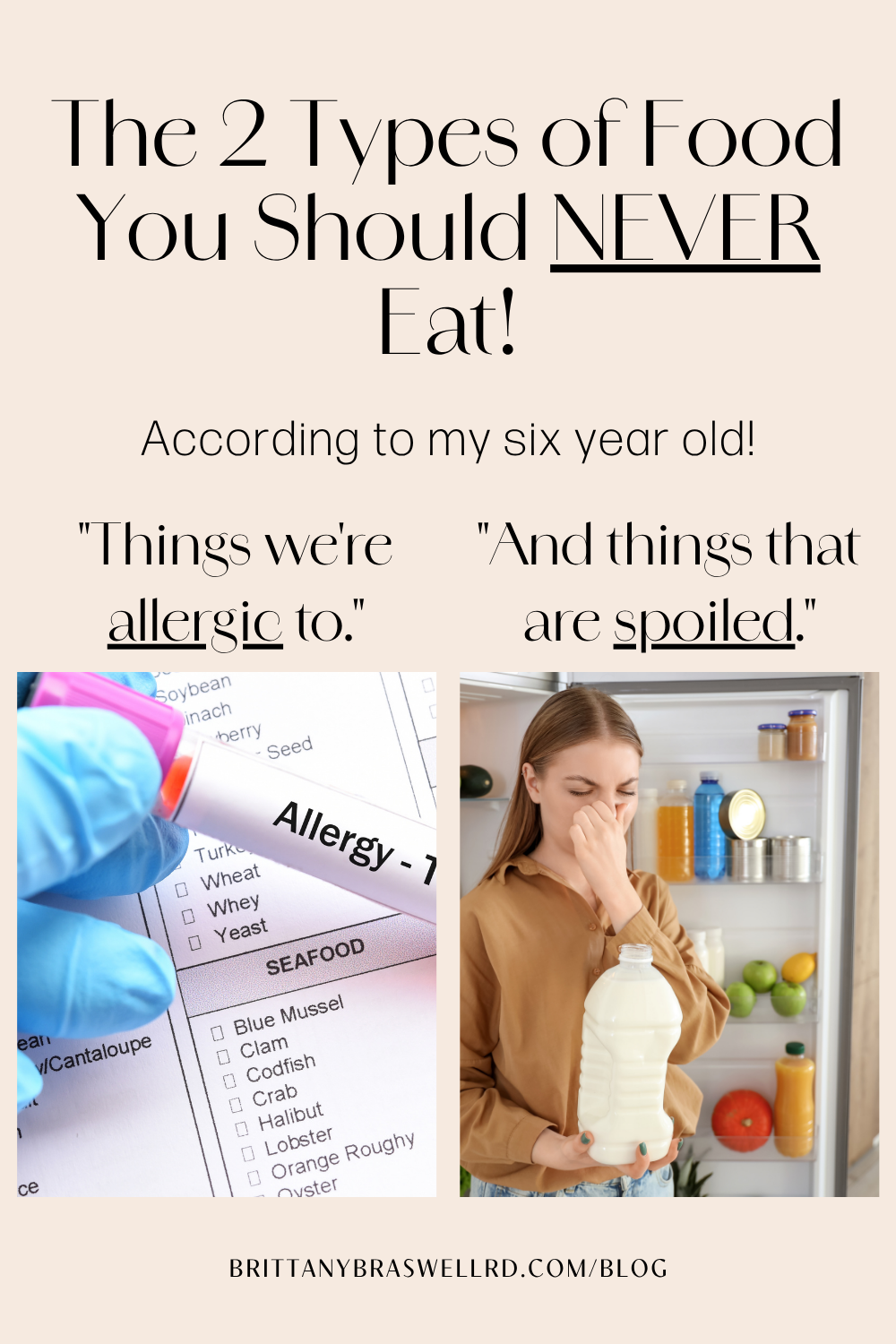
"Things we're allergic to."
And then after a moment of thinking, she added:
"And things that are spoiled."
Y'all.
I almost fell out of my chair.
Because honestly?
That's pretty much it.
The Two Types of Foods We Shouldn't Eat
According to my daughter's surprisingly wise food philosophy, there are only two categories:
1. Foods You're Allergic To
If a food causes a genuine allergic reaction in your body, then yes, that food isn't safe for you.
Your body is communicating that it cannot tolerate that particular food.
This isn't about weight loss.
This isn't about health trends.
This isn't about moral goodness.
This is simply about safety.
2. Foods That Have Gone Bad
Spoiled milk.
Moldy bread.
Food that's no longer safe to consume.
Again, this isn't a food freedom issue.
It's a food safety issue.
And honestly?
That's a pretty short list compared to the hundreds of foods diet culture tries to convince us to fear.
Diet Culture Wants to Make the List Much Longer
Here's where things get tricky.
Diet culture doesn't stop at allergies and food safety.
Instead, it creates an ever-expanding list of foods you should avoid.
One year it's fat.
The next year it's carbs.
Then it's sugar.
Then seed oils.
Then gluten.
Then dairy.
Then fruit.
Then snacks.
Then eating after 7 p.m.
Oy vey.
The rules never stop.
And somehow, no matter how many rules you follow, there's always another expert online ready to tell you you're doing it wrong.
Sound familiar?
Many women come to me feeling completely overwhelmed because they're trying to keep up with hundreds of food rules at once.
They're constantly asking:
"Is this healthy enough?"
"Should I be eating this?"
"What if this ingredient is bad for me?"
"Am I ruining my health if I eat this?"
"Will this make me gain weight?"
The mental load is enormous.
And unfortunately, those fears often steal their joy, distract them from what truly matters, and keep them trapped in cycles of guilt and shame.
The Problem With Labeling Foods as Good or Bad
One of the core principles of food freedom is learning to stop assigning moral value to food.
Food is not a moral issue.
Let me say that again for the women in the back.
Food is not a moral issue.
Eating a cookie does not make you bad.
Eating a salad does not make you virtuous.
Eating ice cream doesn't mean you've failed.
Eating vegetables doesn't mean you've earned a gold star.
Yet so many women unknowingly approach food as though every bite is a character assessment.
Whaaaat?!
When we label foods as "good" or "bad," we often begin labeling ourselves that way too.
If we eat the "good" foods, we feel proud.
If we eat the "bad" foods, we feel guilty.
But God never intended for our relationship with food to become a constant measure of our worth.
What the Bible Says About Food and Freedom
As Christian women, it's important that we evaluate our beliefs through a biblical lens.
And Scripture consistently points us toward freedom rather than fear.
Food is a gift from God.
It's intended to nourish us, sustain us, bring enjoyment, and often bring people together in community.
Throughout Scripture, meals are frequently associated with fellowship, celebration, hospitality, and gratitude.
Yet many women today sit at the dinner table feeling anxious instead of thankful.
Fearful instead of free.
Calculating instead of present.
Obsessing instead of enjoying.
Friend, that isn't the abundant life Jesus invites us into.
When food consumes your thoughts, dictates your mood, and steals your peace, it may be time to ask whether diet culture has become louder than truth.
Food Freedom Doesn't Mean Anything Goes
Now before someone emails me saying, "But Brittany, are you saying nutrition doesn't matter?"
Not at all.
As a registered dietitian, I absolutely care about nutrition.
I care about helping women nourish their bodies well.
I care about helping you feel energized, strong, and healthy.
I care about helping you understand nutrients and how food supports your body.
But food freedom and gentle nutrition go hand in hand.
Food freedom isn't the absence of wisdom.
It's the absence of fear.
It's learning to make food choices from a place of care rather than control.
From wisdom rather than obsession.
From stewardship rather than punishment.
There's a big difference.
What If You Stopped Asking, "Is This Food Good or Bad?"
Imagine how different your life would feel if you stopped filtering every food choice through a moral lens.
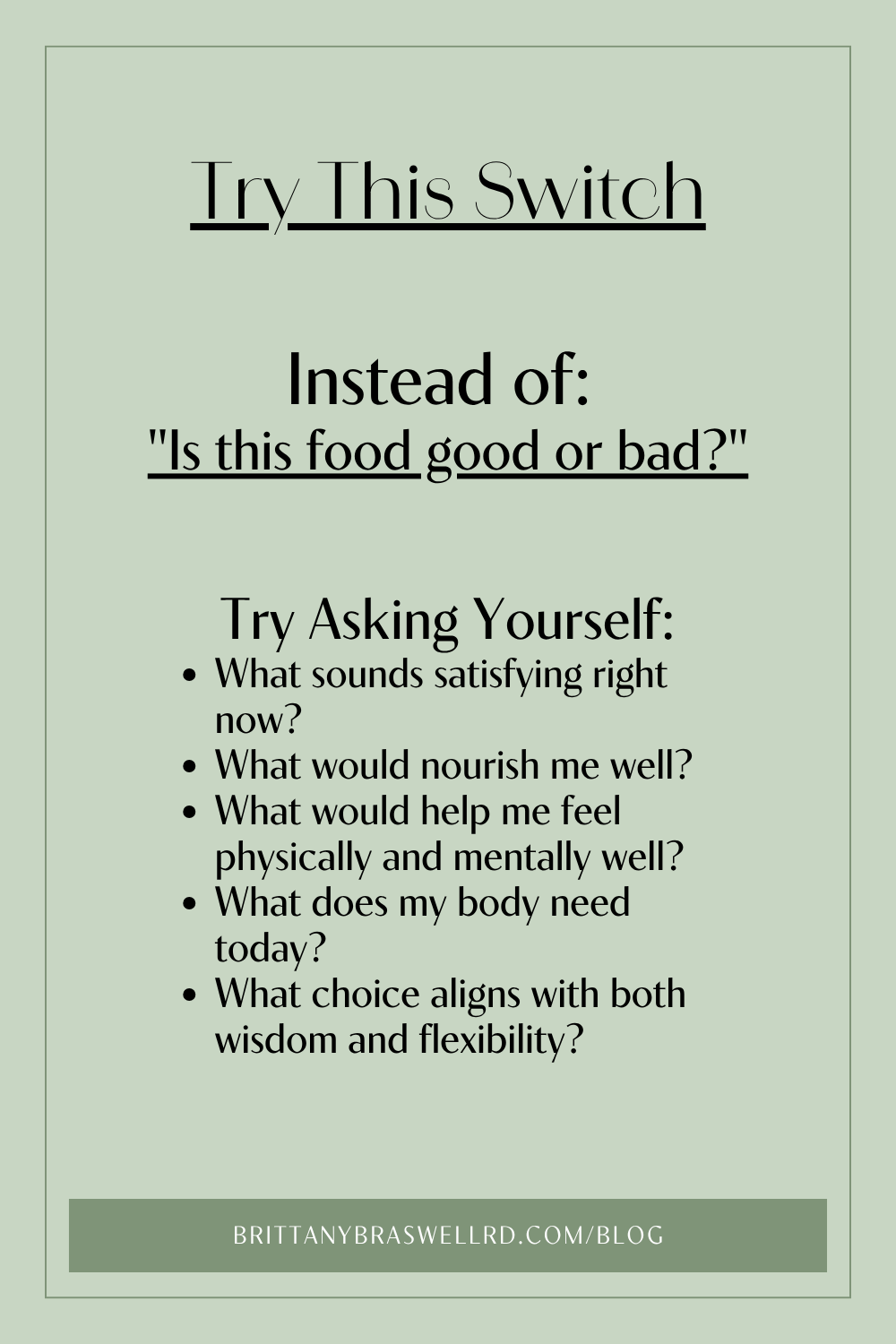
Instead of asking:
"Is this food good or bad?"
You could ask:
- What sounds satisfying right now?
- What would nourish me well?
- What would help me feel physically and mentally well?
- What does my body need today?
- What choice aligns with both wisdom and flexibility?
Notice how different those questions feel.
They're curious.
They're compassionate.
They're flexible.
They're grounded in trust rather than fear.
And that's exactly where food freedom begins.
The Childlike Wisdom We Often Lose
One thing I love about children is that they haven't yet absorbed all the complicated food rules adults carry around.
My daughter wasn't worried about carbs.
She wasn't worried about calories.
She wasn't worried about clean eating.
She wasn't worried about detoxes.
She wasn't worried about whether milk was organic, grass-fed, low-fat, high-protein, or approved by the latest wellness influencer.
She simply knew:
Don't eat foods you're allergic to.
Don't eat foods that are spoiled.
The end.
And while nutrition certainly becomes more nuanced than that, there's something refreshing about returning to that simple perspective.
Children often remind us of truths we've complicated.
Breaking Free From Food Fear
If you've spent years trapped in food anxiety, I know letting go of food rules can feel scary.
In many ways, those rules may have felt protective.
They may have given you a sense of control.
But often, they're also the very thing keeping you stuck.
The constant monitoring.
The second-guessing.
The guilt.
The body checking.
The food obsession.
The endless mental math.
Friend, there is another way.
You can learn to trust your body.
You can learn to enjoy food again.
You can learn to nourish yourself without fear.
You can break free from the exhausting cycle of trying to earn your worth through food choices.
And perhaps it starts with embracing a little bit of childlike wisdom.
Final Thoughts: Maybe My Daughter Is Onto Something
When I asked my daughter what foods we shouldn't eat, I expected a cute answer.
What I got was a powerful reminder.
The list of foods we truly need to avoid is much shorter than diet culture wants us to believe.
Food doesn't have to be complicated.
It doesn't have to consume your thoughts.
It doesn't have to determine your worth.
And while nutrition matters, fear doesn't belong at the table.
So the next time you find yourself spiraling over whether a food is "good" or "bad," remember Callie's advice:
Don't eat foods you're allergic to.
Don't eat foods that have spoiled.
And maybe—just maybe—give yourself permission to let the rest of the food rules go.
Listen to the Faith-Filled Food Freedom Podcast
If this conversation resonated with you, I'd love for you to continue the journey toward food freedom with me.
Subscribe to the Faith-Filled Food Freedom Podcast:
Faith-Filled Food Freedom Podcast on Apple Podcasts
Join Our Free Community
Looking for encouragement, support, and practical guidance as you break free from food fear and body image struggles?
Join our free community:
Faith-Filled Food Freedom Community
You don't have to walk this journey alone.
Friend, freedom is possible. And by God's grace, it's closer than you think.
Stay in touch by subscribing to my personal newsletter, The Full Plate Press
Join over 1000 others and get access to my weekly newsletter with a personal story, BTS sneak peaks, food freedom tips & strategies, riduculous memes, and BONUS goodies from me!
I'm Brittany!
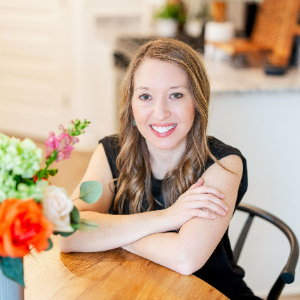
Brittany Braswell, MS, RDN, LD
Host of Faith-Filled Food Freedom & Creator of The Intern Accelerator
I'm here to help Christian women around the world overcome negative body image and an anxiety-ridden relationship with food so they can finally stop stressing and obsessing over how they look and what they eat.