How to Know When You're Hungry & When You're Full: Relearning the Body Cues God Designed
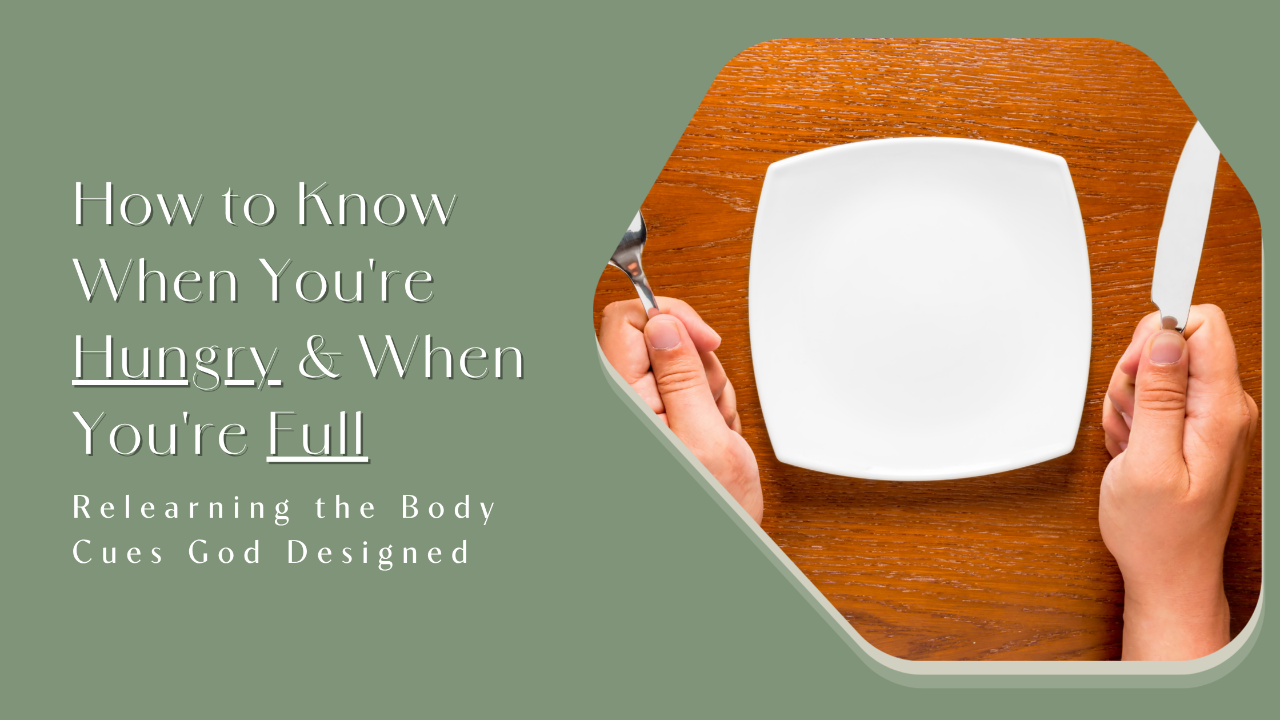
"Mom... sometimes I get whiny when I don't have a snack."
I couldn't help but laugh.
Not because she was wrong—but because she was so right.
Recently, my six-year-old daughter and I sat down behind the microphone for another episode in our summer podcast mini-series. No script. No outline. Just an honest conversation about hunger, fullness, and what it feels like to listen to the body God created.
And somewhere between talking about gymnastics snacks, pizza taking way too long to arrive (whaaaat?! 😅), and getting "hangry," I was reminded of something I think many of us adults desperately need to hear:
Children naturally trust their bodies... until diet culture teaches them not to.
As Christian women, many of us have spent years overriding hunger, ignoring fullness, labeling foods as "good" or "bad," and believing we have to control every bite in order to control our bodies.
But what if food freedom starts by relearning something your body has known all along?
Let's talk about how to know when you're hungry, how to know when you're full, and why reconnecting with these cues can be one of the most healing steps in your journey toward food freedom.
Why Hunger & Fullness Cues Matter More Than Diet Rules
Diet culture loves to hand us rules.
Don't eat after 7 p.m.
Drink water instead.
Wait twenty minutes.
Ignore cravings.
Earn your food.
Sound familiar?
The problem is that these external rules slowly teach us to trust everything except the body God gave us.
But your body wasn't created to confuse you.
It was designed with built-in feedback systems.
Hunger is one of them.
Fullness is another.
When we learn to notice those cues instead of silencing them, eating becomes far less stressful—and much more peaceful.
That's gentle nutrition in action.
How to Know When You're Hungry
One of my favorite moments from our conversation happened when I asked my daughter how she knows she's hungry.
Her answer?
"My tummy feels empty."
Simple.
Beautiful.
Exactly right.
Kids often notice these signals naturally before years of food rules begin drowning them out.
As adults, though, hunger doesn't always show up the same way every time.
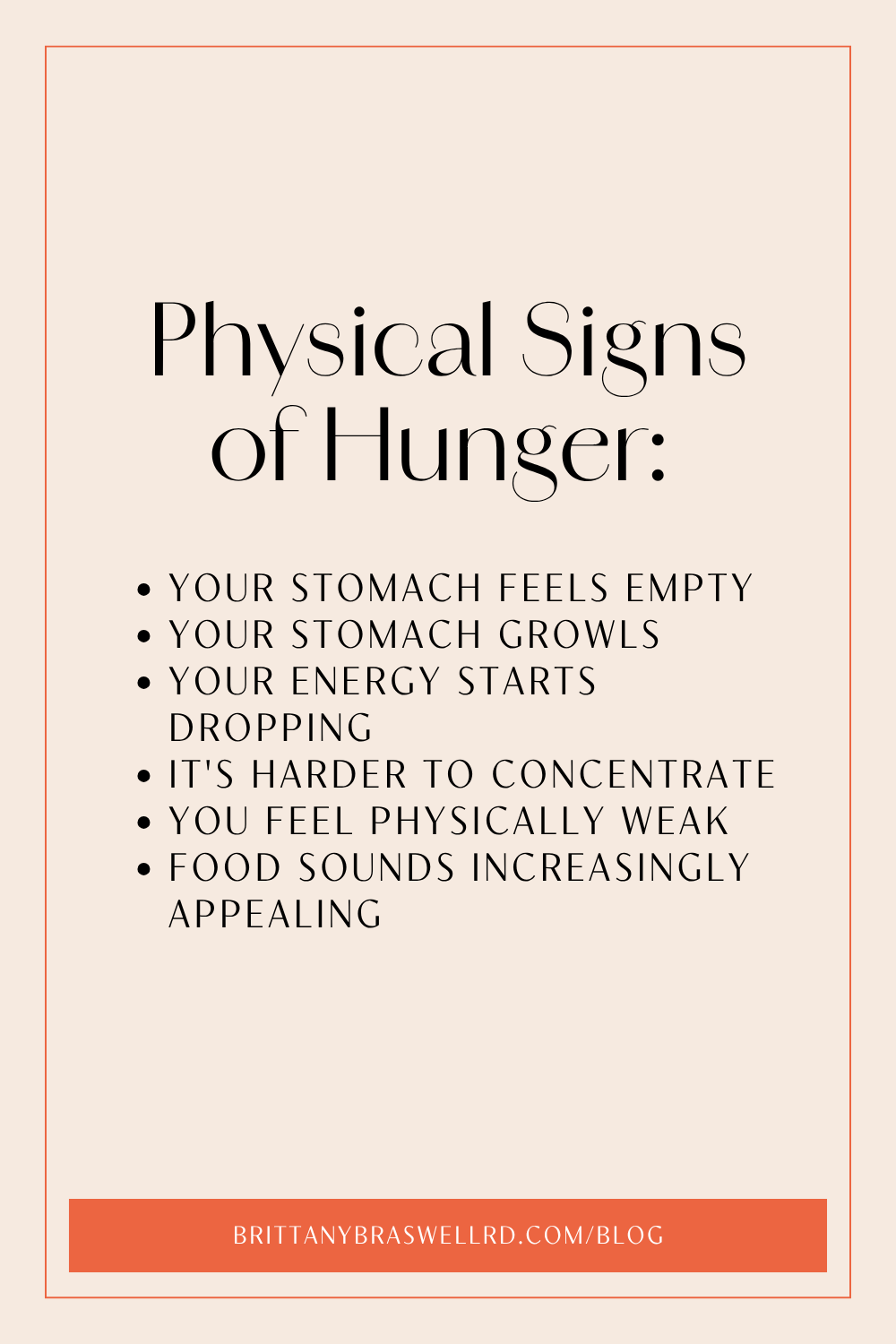
Physical Signs of Hunger
You might notice:
- Your stomach feels empty
- Your stomach growls
- Your energy starts dropping
- It's harder to concentrate
- You feel physically weak
- Food sounds increasingly appealing
These are the cues most of us recognize.
But they're not the only ones.
Emotional Signs of Hunger (Yes... Hangry Is Real)
During our conversation, my daughter admitted that when she gets hungry after gymnastics, she sometimes gets...
"Whiny."
I had to laugh because honestly...
Same.
I shared that one of my earliest hunger cues isn't actually my stomach.
It's my mood.
I become short-tempered.
Less patient.
More irritable.
Sometimes I have trouble focusing.
If you've ever snapped at your spouse, felt unusually overwhelmed, or found yourself struggling to think clearly only to realize you haven't eaten in hours...
Congratulations.
You've experienced being hangry.
Your brain needs fuel.
Your body isn't failing you.
It's communicating with you.
Why You Feel So Hungry After Exercise
My daughter made another surprisingly insightful observation.
After gymnastics, she's almost always hungry.
Why?
"Because I work a lot on gymnastics and I'm getting a lot of energy out."
Exactly.
Movement requires energy.
Whether you're chasing toddlers, walking the dog, lifting weights, gardening, or taking a long hike, your body often needs additional nourishment afterward.
Unfortunately, diet culture often tells women to exercise instead of eating.
Gentle nutrition says something completely different.
Fuel your body because you moved—not as a reward, but because your body needs care.
What a freeing perspective.
How to Know When You're Full
Now let's talk about the other side of the equation.
Fullness.
For many women recovering from chronic dieting or disordered eating, fullness can actually feel harder to recognize than hunger.
Why?
Because years of following meal plans, calorie limits, macros, or food rules often disconnect us from our own body's signals.
So what does fullness actually feel like?
My daughter described it beautifully.
"I'm not hungry anymore."
That's it.
Not stuffed.
Not miserable.
Not uncomfortable.
Simply...
Satisfied.
Healthy Fullness Doesn't Mean Feeling Miserable
One thing I wanted to reinforce during our conversation was this:
Feeling full shouldn't mean your stomach hurts.
It shouldn't mean you're miserable on the couch wishing you hadn't eaten.
Comfortable fullness is enough.
Your hunger has settled.
Your body has what it needs.
You can move on with your day.
That's a very different experience than eating until you're painfully stuffed.
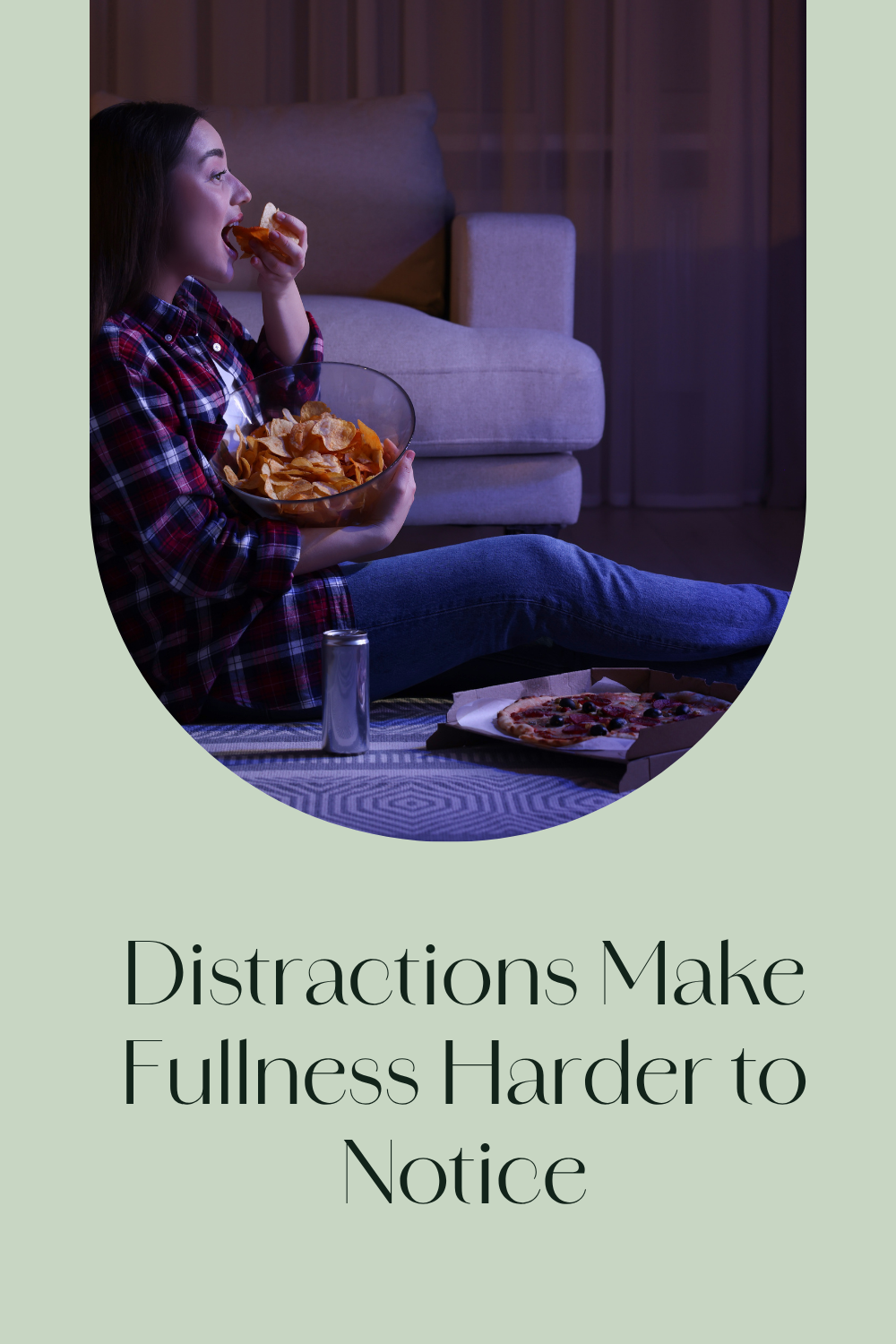
Why Distractions Can Make Fullness Harder to Notice
We also talked about something many adults experience.
Sometimes we accidentally eat past fullness because we're distracted.
Scrolling.
Working.
Watching TV.
Answering emails.
Rushing from one thing to the next.
When our attention is somewhere else, it's much harder to notice the gentle cues our bodies are giving us.
This isn't about eating perfectly.
It's simply an invitation to become a little more present.
To slow down.
To notice.
To check in.
Not because you have to.
But because your body is worth listening to.
What Happens When You Stop Eating Too Soon?
One part of our conversation made me smile because I think every parent has experienced it.
Sometimes my daughter decides she's full.
I don't force her to finish.
Because I can't feel what her body feels.
But occasionally...
She's hungry again before bedtime.
That doesn't mean she failed.
It simply means she learned something.
Maybe she wasn't as full as she thought.
That's valuable information.
The same is true for adults.
Sometimes you'll eat more than your body needed.
Sometimes you'll eat less.
Neither experience is a reason for guilt.
Both are opportunities to learn your body's rhythms with curiosity instead of criticism.
And friend...
That mindset changes everything.
What Diet Culture Gets Wrong About Hunger
Here's something I want you to really hear today.
Your hunger is not the enemy.
It isn't something to suppress.
It isn't something to "beat."
It isn't a sign you've failed.
Hunger is one of the ways God designed your body to communicate with you.
Ignoring hunger over and over doesn't make you healthier.
It often makes food feel even more consuming.
The more we fight our biology, the louder our biology becomes.
Food freedom isn't about having zero hunger.
It's about learning to trust that your body knows what it's doing.
A Christ-Centered Perspective on Listening to Your Body
As believers, we often talk about listening for God's voice.
But sometimes we forget that God also created our physical bodies with wisdom.
Psalm 139 reminds us that we are "fearfully and wonderfully made."
That includes your hunger cues.
Your fullness cues.
Your need for nourishment.
Listening to your body isn't selfish.
It isn't indulgent.
It can actually be an act of stewardship.
Caring for the body God entrusted to you allows you to better serve your family, your work, your ministry, and the people He's called you to love.
Food doesn't have to become a source of fear.
It can become one more reminder of God's faithful provision.
One Small Step You Can Practice This Week
Instead of trying to overhaul your eating habits this week, try something much simpler.
Pause before a meal.
Ask yourself:
-
Am I noticing any signs of hunger?
-
How does my body feel right now?
-
What kind of nourishment sounds satisfying?
-
As I eat, when do I begin feeling comfortably full?
No judgment.
No grades.
No food rules.
Just curiosity.
Those small moments of awareness are often where healing begins.
Food Freedom Starts with Trust
If you've spent years disconnected from your body, please know this:
You are not broken.
You don't have to earn the right to eat.
You don't have to fear hunger.
You don't have to panic when you feel full.
You can learn to trust the body God created.
One meal.
One cue.
One gentle step at a time.
And friend... that's exactly what food freedom looks like.
Listen to the Full Conversation
If this conversation encouraged you, I'd love for you to hear the entire episode featuring my sweet daughter. It's one of my favorite conversations we've ever had, and I think it serves as a beautiful reminder that listening to our bodies doesn't have to be nearly as complicated as diet culture makes it feel.
🎧 Subscribe to the Faith-Filled Food Freedom Podcast on Apple Podcasts
And if you're looking for a supportive community of Christian women pursuing food freedom together, I'd love to invite you to join us.
💛 Join our free Facebook community

I can't wait to welcome you there.
Stay in touch by subscribing to my personal newsletter, The Full Plate Press
Join over 1000 others and get access to my weekly newsletter with a personal story, BTS sneak peaks, food freedom tips & strategies, riduculous memes, and BONUS goodies from me!
I'm Brittany!

Brittany Braswell, MS, RDN, LD
Host of Faith-Filled Food Freedom & Creator of The Intern Accelerator
I'm here to help Christian women around the world overcome negative body image and an anxiety-ridden relationship with food so they can finally stop stressing and obsessing over how they look and what they eat.