Fertility, Hormones, and Food Freedom: What Your Body Might Be Trying to Tell You
Have you ever found yourself wondering…
"Why is my body doing this?"
Maybe your periods are irregular.
Maybe you've lost your cycle altogether.
Maybe you're actively trying to conceive and feeling frustrated, discouraged, or even a little heartbroken.
Or maybe you're not thinking about pregnancy at all, but you're constantly battling food rules, body image struggles, and anxiety around eating—and you've started to wonder if all that stress might be affecting your hormones too.
Friend, if that's you, pull up a chair and grab your coffee (or tea, no judgment here).
Because this conversation matters.
Recently on the Faith-Filled Food Freedom podcast, I sat down with hormone and fertility coach Bekah Yawn to talk about the connection between hormone health, fertility, nutrition, and faith. And whew. This conversation was packed with wisdom.
What I love most is that we didn't just talk about hormones.
We talked about the heart.
Because while nutrition absolutely matters, true healing often involves more than what's on your plate.
Let's dive in.
Why Fertility and Hormone Health Matter (Even If You're Not Trying to Get Pregnant)
When most women hear the word fertility, they immediately think:
"That's not relevant to me right now."
But here's the thing.
Your fertility isn't just about whether or not you're trying to conceive.
It's actually one of the clearest indicators of overall health.
As Bekah explained on the podcast, fertility is often the "fruit" of a healthy body.
Think about it this way:
Your body has multiple systems working together behind the scenes every single day.
Your digestive system.
Your nervous system.
Your endocrine (hormone) system.
Your reproductive system.
When those systems are functioning well, your body is generally able to support healthy hormone production and ovulation.
When something is off, your menstrual cycle is often one of the first places it shows up.
In other words?
Your period isn't just an inconvenience.
It's information.
And that's a message many women desperately need to hear.
The Missing Piece Most Women Never Consider: Spiritual Health
This was one of my favorite parts of our conversation.
When women struggle with fertility, hormone imbalances, or recovery from disordered eating, the first question is often:
"What should I eat?"
And while nutrition matters tremendously, sometimes God wants to work deeper than our meal plans.
Years ago, before my husband and I conceived our first child, we walked through a season of infertility.
During that time, I was carrying around something I hadn't fully acknowledged:
Unforgiveness.
I was harboring resentment toward someone in my life.
And while I wasn't consciously connecting that struggle to our fertility journey, God was.
Through prayer, community, and honest conversations in our small group, the Lord gently revealed what I needed to surrender.
After choosing forgiveness and experiencing freedom in that area, something shifted.
Not just physically.
Spiritually.
Emotionally.
Relationally.
And shortly afterward, we conceived our son.
Now before anyone misunderstands me, let me be clear:
Not every fertility struggle is caused by a spiritual issue.
Not every hormone imbalance is rooted in unforgiveness.
Not every health challenge is the result of sin.
But Scripture repeatedly invites us to pray:
"Search me, God."
And that's a prayer worth praying.
Especially when we're seeking healing.
Sometimes the greatest breakthrough starts with asking:
"Lord, is there anything in my heart You want to reveal?"
What Missing Periods Can Tell Us About Hormone Health
Let's talk about something I discuss frequently with women recovering from disordered eating:
Amenorrhea.
That's the medical term for an absent menstrual cycle.
For many women, especially those who have spent years pursuing weight loss or controlling their body size, losing their period can actually feel like an accomplishment.
I know.
That sounds backwards.
But it's true.
Many women have been conditioned to believe that:
- Smaller is better
- Eating less is healthier
- More exercise is always good
- Missing a period is normal
The reality?
It's often a sign that your body is under stress.
As Bekah explained, your body views ovulation as a secondary function.
When your brain perceives a threat—whether that's under-fueling, chronic dieting, excessive exercise, poor sleep, emotional stress, or other health concerns—it shifts resources toward survival.
And reproduction moves down the priority list.
Your body essentially says:
"Now is not the time."
Not because your body is broken.
Because your body is smart.
And honestly? That's pretty incredible.
Why Your Period Is a Vital Sign
One of the most powerful takeaways from our conversation was this:
Your period is often called your fifth vital sign.
Think about that.
We pay attention to:
- Blood pressure
- Heart rate
- Temperature
- Respiratory rate
Yet many women have been taught to completely ignore signs that their menstrual cycle is unhealthy.
Friend, your body deserves better than that.
A healthy menstrual cycle provides important information about what's happening internally.
While every woman is unique, some common signs that may indicate hormone imbalances include:
- Missing periods
- Extremely painful periods
- Severe PMS symptoms
- Heavy bleeding
- Very light bleeding
- Significant fatigue
- Intense mood swings
- Persistent headaches around your cycle
These symptoms are incredibly common.
But common doesn't automatically mean normal.

Learning to Appreciate the Body God Created
Can I be honest with you?
One of the greatest gifts of learning about hormones has nothing to do with hormones.
It's appreciation.
The more I learn about how God designed the human body, the more amazed I become.
The coordination.
The precision.
The intentionality.
It's breathtaking.
Psalm 139 tells us we are "fearfully and wonderfully made."
Sometimes those words can feel abstract.
But when you begin to understand how your body works—how hormones communicate, how ovulation occurs, how cycles regulate themselves—you start seeing evidence of God's craftsmanship everywhere.
And that perspective can be incredibly healing for women who have spent years at war with their bodies.
Because it's hard to hate something when you're actively learning to marvel at it.
Supporting Hormone Health Without Creating More Food Rules
Now let's address the question I know many readers are wondering:
"What should I actually eat?"
If you've struggled with disordered eating, body image concerns, or chronic dieting, this question can feel loaded.
Because so many women have experienced hormone or fertility advice that sounds like:
- Eliminate this.
- Cut out that.
- Never eat these foods.
- Follow this perfect protocol.
And before they know it?
They're right back in food obsession.
Back in restriction.
Back in fear.
Friend, healing shouldn't require trading one set of food rules for another.
One of my favorite things Becca shared was that our ultimate goal isn't perfect eating.
Our goal is faithfulness.
Instead of asking:
"What's the perfect fertility diet?"
Consider asking:
"How can I nourish the body God entrusted to me today?"
That's a very different question.
A gentler question.
A more sustainable question.
Some foundational nutrition principles that support hormone health include:
Prioritize Adequate Nourishment
Undereating can negatively impact hormone production and ovulation.
Your body needs sufficient energy to feel safe.
Don't Fear Carbohydrates
Say it with me for the people in the back:
Carbohydrates are not the enemy.
Hormones require adequate fuel.
And for many women recovering from food fears, embracing carbohydrates is a significant part of healing.
Include Healthy Fats
Healthy fats support hormone production and overall health.
Stay Hydrated
Simple? Yes.
Important? Also yes.
Focus on Consistency Over Perfection
You do not need a perfect diet.
You need a nourished body.
There is a difference.
What If You're Struggling With Fertility Right Now?
If you're in the middle of a fertility journey, I want to pause for a moment and speak directly to you.
I know this can be hard.
I know the waiting can feel heavy.
I know the uncertainty can be exhausting.
And I know how easy it is to begin viewing your body as the enemy.
But friend, your body is not your enemy.
And neither is God.
You may not have all the answers right now.
You may not understand the timeline.
You may not know what's coming next.
But Jesus is present in every part of the journey.
Even the painful parts.
As Bekah beautifully reminded listeners at the end of the episode:
Jesus is standing right beside you.
He sees your tears.
He hears your prayers.
And He has not forgotten you.
The Bottom Line on Fertility, Hormones, and Food Freedom
Whether you're trying to conceive, recovering your period, healing your relationship with food, or simply learning how to better care for your body, here's what I want you to remember:
Your body is not a problem to fix.
It's a gift to steward.
Healthy hormones matter.
Proper nourishment matters.
Stress management matters.
But above all, your relationship with Christ matters.
As you pursue health, don't lose sight of the bigger picture.
The goal isn't perfect hormones.
The goal isn't a perfect cycle.
The goal isn't even a perfect body.
The goal is becoming a woman who is free enough to fully live out the purpose God has for her.
And that kind of freedom?
That's worth pursuing.
Want More Support on Your Food Freedom Journey?
If you're tired of obsessing about food, constantly thinking about your body, or feeling trapped by diet culture, I'd love to help.
Join Our Free Community
Join the Faith-Filled Food Freedom Community
Listen to the Faith-Filled Food Freedom Podcast
Faith-Filled Food Freedom Podcast on Apple Podcasts
Learn More About Bekah Yawn
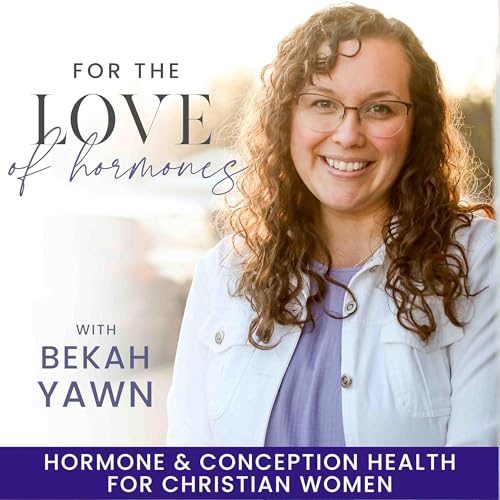
If today's conversation about hormone health and fertility resonated with you, be sure to check out Bekah's podcast, For the Love of Hormones, and learn more about her work helping women understand their cycles and support their fertility through a faith-based lens.
Friend, if this post encouraged you, share it with a woman who needs the reminder that her body is fearfully and wonderfully made—and that true healing involves both faith and nourishment.
Until next time, keep chasing joy and choosing freedom.
Stay in touch by subscribing to my personal newsletter, The Full Plate Press
Join over 1000 others and get access to my weekly newsletter with a personal story, BTS sneak peaks, food freedom tips & strategies, riduculous memes, and BONUS goodies from me!
I'm Brittany!
Brittany Braswell, MS, RDN, LD
Host of Faith-Filled Food Freedom & Creator of The Intern Accelerator
I'm here to help Christian women around the world overcome negative body image and an anxiety-ridden relationship with food so they can finally stop stressing and obsessing over how they look and what they eat.