A Simple Guide to Macronutrients and Micronutrients
Have you ever had one of those moments where your child asks a nutrition question and you suddenly realize you're not quite sure how to explain it in a way they'll understand?
You know the moment.
You're unloading groceries, serving dinner, or trying to convince your kiddo that the carrot on their plate isn't actually poison. Then they hit you with a question like, "What does this food do for my body?"
Cue the deer-in-headlights look.
Whaaaat?!
The truth is, nutrition can feel complicated enough for adults. Add in the challenge of explaining it to children, and suddenly we're all wishing for a simpler way to talk about food.
That's exactly what inspired a recent special mini episode of the Faith-Filled Food Freedom Podcast featuring my daughter and me. Together, we explored one of the foundational nutrition concepts every family can benefit from understanding: macronutrients and micronutrients.
Now before your eyes glaze over and you start having flashbacks to high school science class, stay with me.
We're keeping this simple, practical, and completely free from diet culture nonsense.
Because understanding nutrition doesn't have to lead to food obsession. In fact, when approached through a gentle nutrition lens, learning about nutrients can actually help us appreciate God's design for our bodies and the incredible foods He created to nourish us.
Let's dive in.
What Are Macronutrients and Micronutrients?
One of the biggest misconceptions I see among women struggling with food anxiety is the belief that nutrition has to be complicated.
Friend, it doesn't.
At its core, nutrition is simply understanding how food helps our bodies function.
A great place to start is understanding the difference between macronutrients and micronutrients.
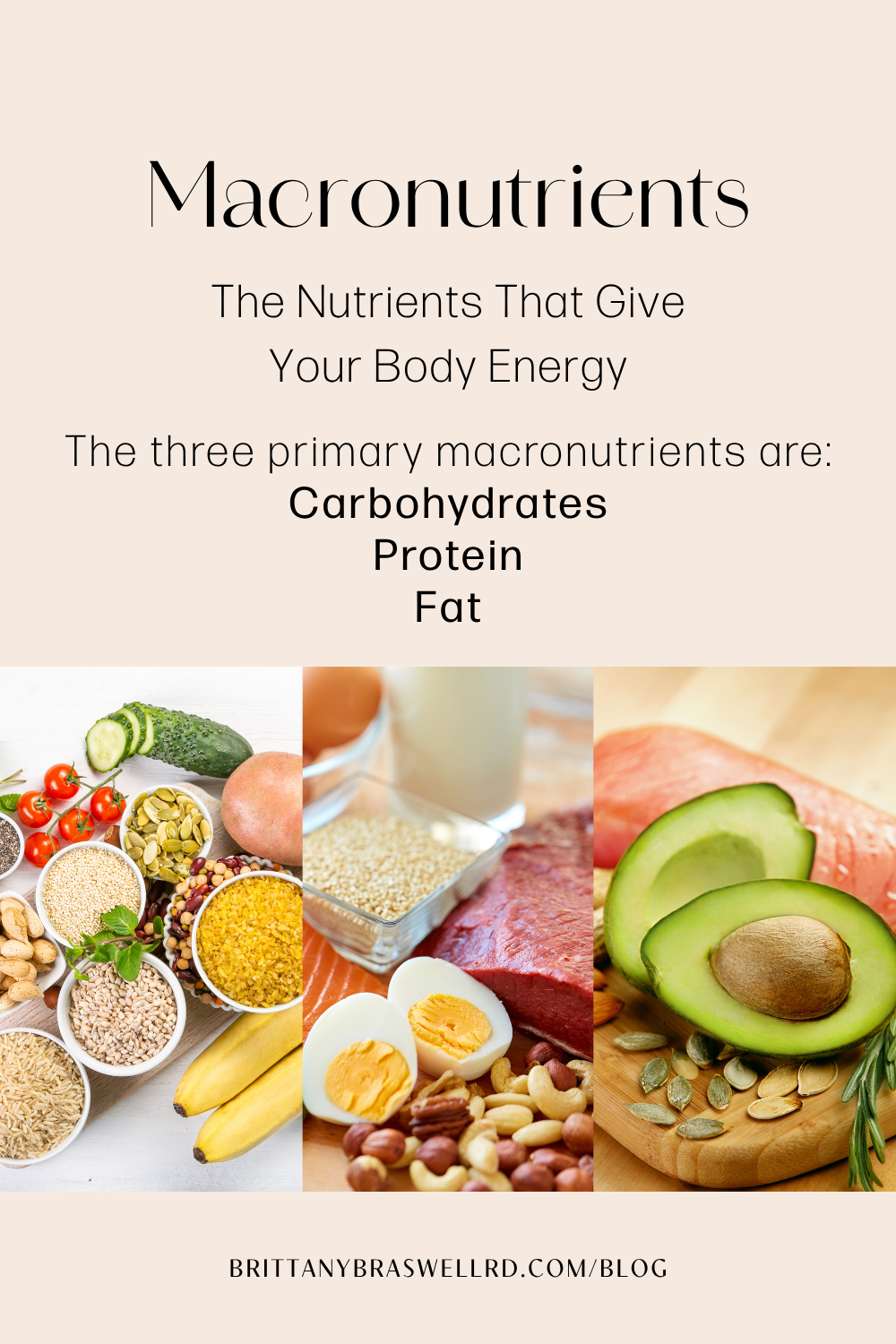
Macronutrients: The Nutrients That Give Your Body Energy
Think of macronutrients as the fuel in your car.
Without gas, your car isn't going very far.
Without macronutrients, your body isn't either.
The three primary macronutrients are:
- Carbohydrates
- Protein
- Fat
These nutrients provide energy and help your body perform countless functions every single day.
Let's break them down.
Carbohydrates: Your Body's Preferred Energy Source
Poor carbs.
Can we all agree they've gotten a pretty bad reputation over the last couple of decades?
If you've spent any amount of time trapped in diet culture, you've probably been told that carbs are the enemy.
But God's design says otherwise.
Carbohydrates are your body's preferred source of energy. They help fuel your brain, muscles, organs, and daily activities.
Think about it.
Would you expect your phone battery to work without charging it?
Of course not.
Your body needs carbohydrates in much the same way.
Foods that contain carbohydrates include:
- Bread
- Rice
- Pasta
- Fruit
- Potatoes
- Beans
- Milk
- Crackers
Carbohydrates aren't something to fear. They're something your body was designed to use.
Protein: The Builder and Repair Crew
If carbohydrates are the fuel, protein is the construction crew.
Protein helps build and repair tissues throughout the body. It supports muscle growth, hormone production, immune function, and countless other processes.
Protein-rich foods include:
- Chicken
- Beef
- Fish
- Eggs
- Greek yogurt
- Cottage cheese
- Beans
- Lentils
- Tofu
Your body relies on protein every single day—not because you're trying to change your body, but because your body is constantly working on your behalf.
Pretty amazing when you think about it.
Fat: The Nutrient We Need More Than We Realize
Can we have a quick heart-to-heart?
Many women I work with are still carrying around old fears about fat.
Maybe you've been conditioned to believe that eating fat causes weight gain.
Maybe you've spent years choosing fat-free products because they seemed "healthier."
Oy vey.
The reality is that fat serves many important roles in the body.
Dietary fat helps:
- Support hormone production
- Protect organs
- Support brain health
- Provide energy
- Help absorb certain vitamins
Which brings us to an important nutrition concept from the podcast episode.
Some vitamins actually require fat to be absorbed properly.
Let's talk about that.
What Are Micronutrients?
While macronutrients provide energy, micronutrients support many of the body's important functions behind the scenes.
Think of micronutrients as the support staff running a large organization.
They may not always be the most visible part of the operation, but things don't run smoothly without them.
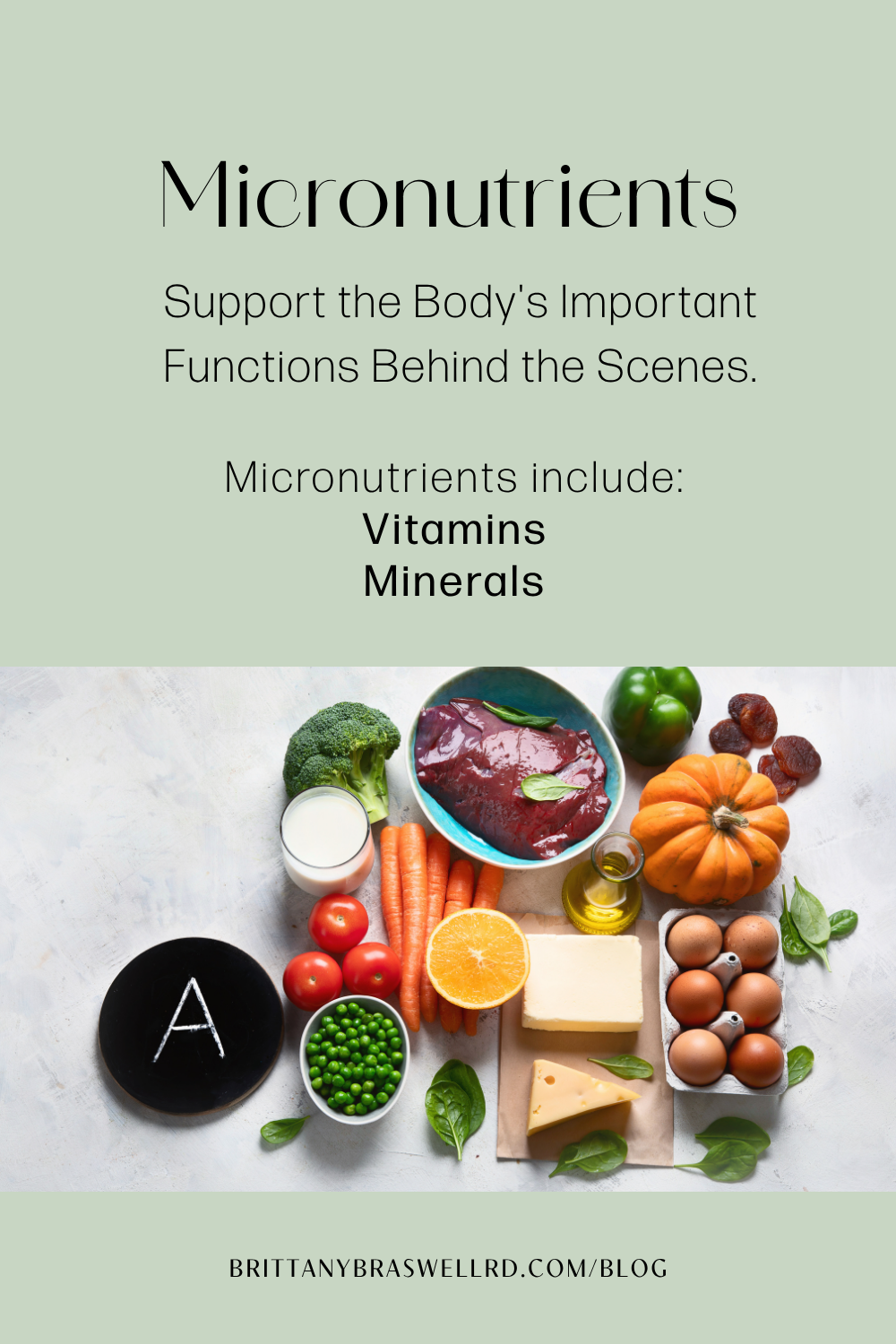
Micronutrients include:
- Vitamins
- Minerals
These nutrients are needed in smaller amounts than macronutrients, but they still play essential roles in helping your body function well.
Fat-Soluble Vitamins: A, D, E, and K
One of the fun topics my daughter and I discussed in the podcast episode was the idea of fat-soluble vitamins.
Fat-soluble vitamins include:
- Vitamin A
- Vitamin D
- Vitamin E
- Vitamin K
These vitamins need dietary fat in order to be properly absorbed and utilized by the body.
Think of fat as the vehicle that helps transport these vitamins where they need to go.
Without the vehicle, the trip becomes a lot more difficult.
That's one reason why including healthy sources of fat with meals can be beneficial.
Foods That Contain Vitamin A
Vitamin A was the star of our conversation.
My daughter quickly remembered one of the classic sources:
Carrots.
Other foods rich in vitamin A include:
- Sweet potatoes
- Red, orange, and yellow bell peppers
- Pumpkin
- Butternut squash
- Spinach
- Kale
Notice a trend?
Many vitamin A-rich foods have vibrant orange or deep green colors.
God's creativity shows up beautifully in the colorful foods He created for us to enjoy.
Water-Soluble Vitamins: B Vitamins and Vitamin C
The other category we discussed was water-soluble vitamins.
These include:
- B vitamins
- Vitamin C
Unlike fat-soluble vitamins, these nutrients dissolve in water and do not require dietary fat for absorption.
Vitamin C can be found in foods like:
- Oranges
- Strawberries
- Kiwi
- Bell peppers
- Broccoli
B vitamins are found in a variety of foods, including:
- Whole grains
- Meat
- Dairy products
- Eggs
- Legumes
While we only scratched the surface in our mini episode, understanding that different vitamins work differently in the body can help both parents and children begin developing a healthy curiosity about nutrition.
Why Teaching Kids About Nutrition Matters
Here's where I want to gently offer an important distinction.
Teaching children about nutrition is not the same thing as teaching them diet culture.
Unfortunately, many of us grew up hearing messages that linked food choices to morality.
Good foods.
Bad foods.
Healthy foods.
Junk foods.
And before long, many of us learned to associate our worth with what we ate.
That's not what we're aiming for here.
Teaching children about nutrients can be an opportunity to focus on what food adds rather than what food takes away.
Instead of saying:
"This food is bad for you."
We can say:
"This food helps provide energy."
Or:
"This food contains vitamins that help support your body."
See the difference?
One approach creates fear.
The other creates curiosity.
One leads to shame.
The other leads to learning.
As Christian parents, we have a beautiful opportunity to help our children see food as a gift from God rather than something to fear, control, or obsess over.
How Understanding Nutrients Supports Food Freedom
Now you may be wondering:
"Brittany, what does all of this have to do with food freedom?"
I'm so glad you asked.
Because understanding nutrition and obsessing over nutrition are not the same thing.
Food freedom doesn't mean ignoring nutrition.
It means learning about nutrition without allowing it to become an idol.
It means understanding how foods nourish your body while also recognizing that your value comes from Christ—not your food choices.
When we approach nutrition from a place of curiosity rather than control, everything changes.
We stop asking:
"What should I eliminate?"
And start asking:
"How can I nourish the body God gave me?"
We stop chasing perfection.
We start practicing stewardship.
We stop fearing food.
We start appreciating it.
Friend, that's where freedom begins.
Simple Ways to Talk About Nutrition With Your Kids
If you're looking for practical ways to start these conversations at home, here are a few ideas:
Focus on What Food Does
Instead of labeling foods as good or bad, talk about their purpose.
Examples:
- "Carrots contain vitamin A."
- "Protein helps our muscles."
- "Carbohydrates give us energy."
Encourage Curiosity
Invite questions.
You don't need all the answers.
Sometimes saying, "Let's learn together," is enough.
Keep It Age Appropriate
Children don't need nutrition textbooks.
Simple explanations often work best.
Model a Healthy Relationship With Food
Perhaps the most powerful lesson your children will learn isn't what you teach them.
It's what they observe.
The way you talk about food.
The way you talk about your body.
The way you respond to eating.
Those messages matter.
Final Thoughts: Nutrition Doesn't Have to Be Complicated
If you've spent years trapped in food rules, nutrition labels, calorie counting, or diet culture messaging, learning about nutrients might feel intimidating.
But it doesn't have to be.
Understanding macronutrients and micronutrients can be a simple way to appreciate the incredible design of our bodies without falling into the trap of food obsession.
Friend, nutrition knowledge is not the enemy.
Fear is.
Shame is.
Perfectionism is.
But learning how God designed food to nourish our bodies? That's a beautiful thing.
And if you're raising kids, these conversations can become opportunities to build a healthier, more peaceful relationship with food for the next generation.
What a gift that is.
Continue the Conversation
If this topic resonated with you, I'd love for you to continue learning alongside us.
🎙️ Subscribe to the Faith-Filled Food Freedom Podcast
Faith-Filled Food Freedom Podcast on Apple Podcasts
💬 Join our free community of women pursuing food freedom and body peace.
Faith-Filled Food Freedom Community
Whether you're learning how to talk to your children about nutrition, working to overcome food anxiety yourself, or simply trying to cultivate a healthier relationship with food and your body, know this:
You don't have to do it alone.
And freedom is possible.
Stay in touch by subscribing to my personal newsletter, The Full Plate Press
Join over 1000 others and get access to my weekly newsletter with a personal story, BTS sneak peaks, food freedom tips & strategies, riduculous memes, and BONUS goodies from me!
I'm Brittany!

Brittany Braswell, MS, RDN, LD
Host of Faith-Filled Food Freedom & Creator of The Intern Accelerator
I'm here to help Christian women around the world overcome negative body image and an anxiety-ridden relationship with food so they can finally stop stressing and obsessing over how they look and what they eat.